

24 inches equals 2 feet, 60.96 centimeters, or 609.6 millimeters. This length is easy to visualize when you compare it with familiar household items, furniture, and everyday tools.
If you need to estimate two feet without a measuring tape, several common objects can help. Some items are manufactured in exact 24-inch sizes, while others vary by brand or design. A computer monitor, for example, uses a diagonal screen measurement, while a wall shelf usually uses its horizontal length.
In this guide, you will discover 17 common things that are 24 inches long or close to that measurement. You will also learn how to compare two feet with everyday objects and convert 24 inches into other units.
How Long Is 24 Inches?
Twenty-four inches is exactly 2 feet. It is also 60.96 centimeters and 0.6096 meters. This measurement is useful when estimating furniture dimensions, checking shelf sizes, or measuring objects around your home.
Here is a quick conversion table for reference.
| Measurement unit | Equivalent |
|---|---|
| Inches | 24 inches |
| Feet | 2 feet |
| Centimeters | 60.96 cm |
| Meters | 0.6096 m |
| Millimeters | 609.6 mm |
| Yards | 0.667 yards, approximately |
17 Common Things That Are 24 Inches Long
The following examples include tools, furniture, sports equipment, and household objects. Some are available in exact 24-inch sizes, while others are approximate examples. Always check the product dimensions when precise measurements matter.
1. Two Standard 12-Inch Rulers
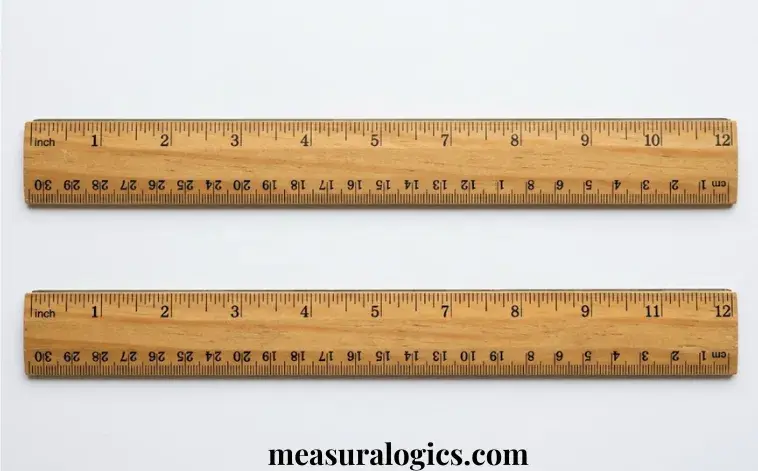
Two standard 12-inch rulers provide one of the simplest ways to visualize 24 inches. Place them in a straight line, with one ruler’s end touching the other’s beginning. Together, they measure exactly 24 inches.
Most standard school rulers have inch markings along one edge. These markings make it easy to confirm the total length. You can use wooden, plastic, or metal rulers for this comparison, provided each ruler measures 12 inches.
This example is particularly useful because it does not depend on furniture dimensions or product variations. You can also use two rulers to measure a tabletop, bookshelf, or other household surface.
If you do not have a two-foot measuring stick, this method provides a practical alternative. Make sure the rulers touch without overlapping or leaving a gap.
2. A 24-Inch Computer Monitor
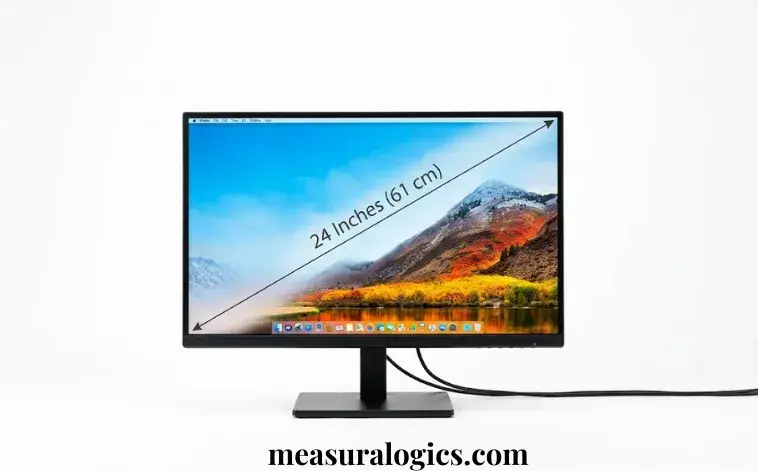
A 24-inch computer monitor is a familiar example of this measurement. However, the advertised 24-inch size refers to the screen’s diagonal, measured from one corner to the opposite corner. It does not mean the monitor is 24 inches wide.
A typical widescreen monitor with a 16:9 aspect ratio has a screen width of approximately 20.9 inches and a height of 11.8 inches. Its frame and stand can increase its overall dimensions.
This distinction matters when comparing objects that are 24 inches long. If you need a reference for a straight, two-foot distance, measure the monitor’s actual width rather than relying on its advertised screen size.
A 24-inch monitor can still help you understand the scale of a two-foot measurement. Before purchasing one for a specific workspace, check the manufacturer’s listed width, height, and depth.
3. A Two-Foot Carpenter’s Level
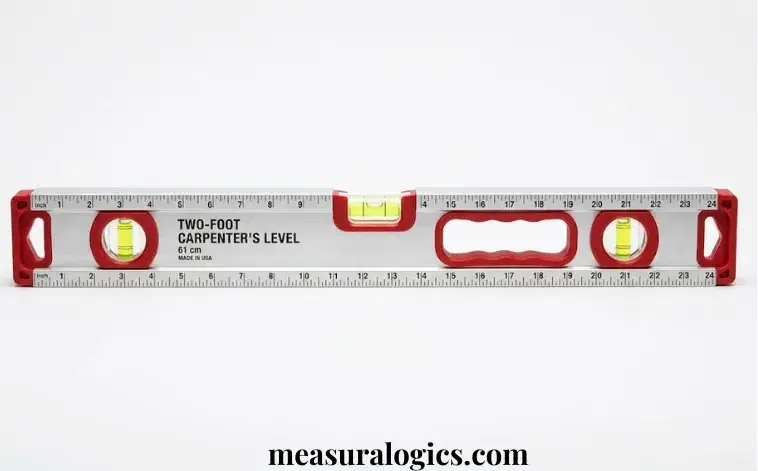
A two-foot carpenter’s level is a practical tool for visualizing 24 inches. Many levels are available in a 24-inch length, making them a useful example of an object that measures exactly two feet.
Carpenters and homeowners use levels to check whether surfaces are horizontal or vertical. The tool usually contains one or more liquid-filled vials with bubbles. When the bubble sits between the marked lines, the measured surface is level.
Its straight, rigid body makes the length easy to compare with other objects. You can place a 24-inch level beside a shelf, cabinet, or tabletop to see how the dimensions compare.
Levels also come in shorter and longer versions, so check the product label before using one as a reference. A two-foot level is particularly useful when installing shelves or checking small construction projects.
4. An Acoustic Guitar Body
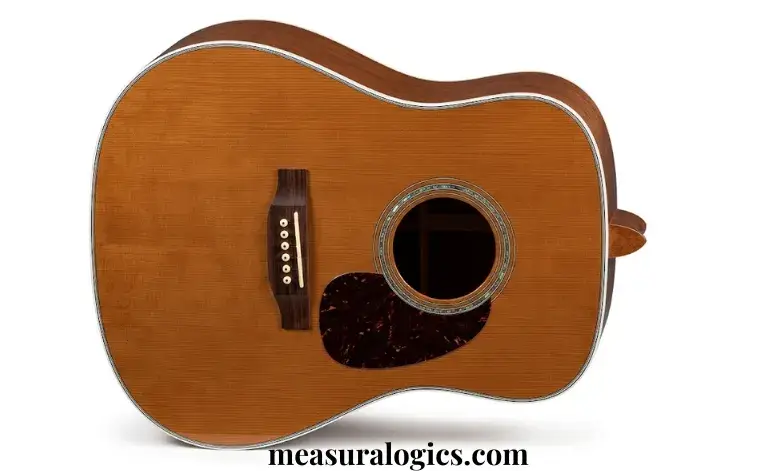
An acoustic guitar can help you visualize a length close to two feet, but its body size varies by model. The body alone is usually shorter than the entire instrument, which commonly measures much more than 24 inches from end to end.
Some larger acoustic guitar bodies approach two feet along their longest dimension. Smaller travel guitars and compact models have different proportions.
When using a guitar as a measurement example, distinguish between the body length and the total guitar length. The body is the large wooden section that contains the sound hole. The neck and headstock extend beyond it.
To check a particular guitar, measure from the bottom of the body to the point where the body meets the neck. Compare that result with 24 inches to see how close it comes.
A guitar is a useful visual reference because its body is easy to recognize. However, describe it as an approximate example unless you have verified the specific model’s dimensions.
5. A Large Cutting Board

Some large kitchen cutting boards measure around 24 inches along their longest side. These boards offer a familiar way to picture a two-foot distance, particularly if you spend time cooking at home.
A large cutting board provides room for preparing vegetables, slicing bread, or arranging ingredients. Its actual size depends on its intended use, material, and manufacturer.
Wooden boards often have different shapes and thicknesses. Plastic cutting boards also come in several sizes, including large commercial options. Therefore, not every large cutting board measures two feet.
To use one as a measurement reference, check its listed length or measure it from one end to the other. Do not confuse its length with its width or thickness.
If your cutting board measures 24 inches long, it gives you a direct example of an everyday object that matches two feet.
6. A Small Youth Baseball Bat

Some small youth baseball bats measure 24 inches long. These bats are designed for young players or specific training activities, depending on their construction and intended use.
A baseball bat is measured from the knob at the bottom of the handle to the end of the barrel. This straight-line measurement makes it a useful example when learning how long 24 inches is.
Bats are available in many lengths, so a standard adult bat is not an appropriate substitute for a 24-inch model. Check the manufacturer’s specifications to confirm the exact length.
You can also use a bat’s dimensions to compare sporting equipment. Placing a 24-inch bat beside a longer bat makes the difference in length easy to see.
Although this example is less common around the home than a ruler or shelf, it can be useful for readers interested in sports equipment.
7. A Mini Skateboard
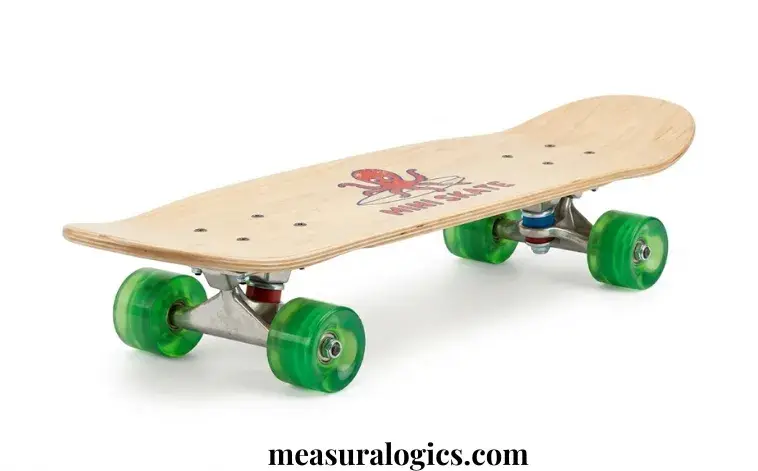
Some mini skateboards measure approximately 24 inches long. These compact boards are smaller than many full-size skateboards and are designed for particular riding styles or younger users.
A skateboard’s length is measured from the front tip of the deck to the back tip. The deck is the flat board on which the rider stands. Its wheels and trucks add to the overall appearance but do not change the deck’s stated length.
Mini skateboards vary in size, so check the dimensions before using one as an exact reference. Some compact models are shorter than two feet, while others approach or reach that length.
If you find a board measuring 24 inches, lay it flat and compare it with a two-foot ruler. This provides an easy way to visualize the distance without relying on estimates.
Two boards may look similar but have different lengths. The listed measurement is more reliable than appearance alone.
8. A 24-Inch Wall Shelf
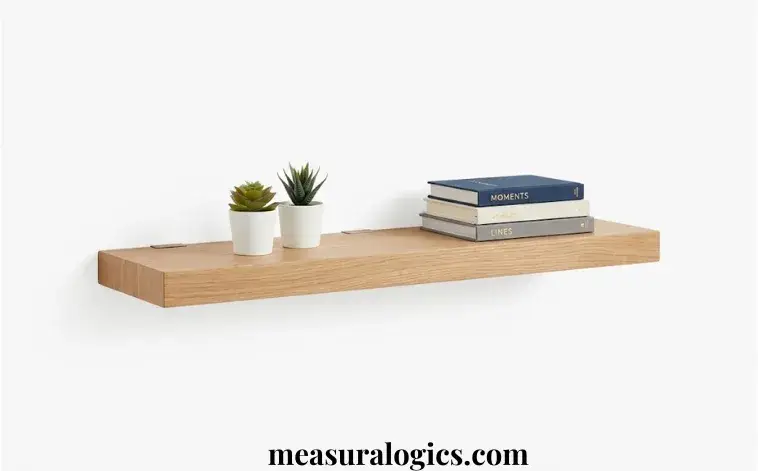
A 24-inch wall shelf is a straightforward example of an object measuring two feet. Many shelves are sold in this width, making them useful for bedrooms, offices, kitchens, and living rooms.
The shelf’s length is measured horizontally from one end to the other. Its depth and thickness are separate dimensions. A shelf might be 24 inches long while extending only several inches from the wall.
You can use a shelf to picture the space needed for books, small plants, framed photographs, or decorative objects. A two-foot shelf can fit into a narrow wall area without taking up as much space as a larger shelving unit.
However, shelf sizes differ by manufacturer. Always confirm the listed width before buying one for a particular location.
If you already have a shelf at home, measure it from end to end. A shelf close to 24 inches provides a useful reference when estimating other furniture or planning a wall arrangement.
9. A Small Bathroom Vanity

Some compact bathroom vanities are manufactured in a 24-inch width. These units are designed for smaller bathrooms, powder rooms, and other spaces where a large cabinet may not fit.
The width usually refers to the distance across the front of the vanity. Its height and depth are separate measurements, so the cabinet does not necessarily have a 24-inch front-to-back dimension.
A small vanity typically includes storage space beneath a sink. Depending on the design, it may have doors, drawers, or open shelving.
If you are renovating a bathroom, the 24-inch width can help you estimate how much wall space the unit requires. You should also account for plumbing, door clearance, and nearby fixtures.
Not every compact vanity is exactly two feet wide. Measure the cabinet or review its specifications before treating it as a precise reference.
10. A Large Furniture Drawer
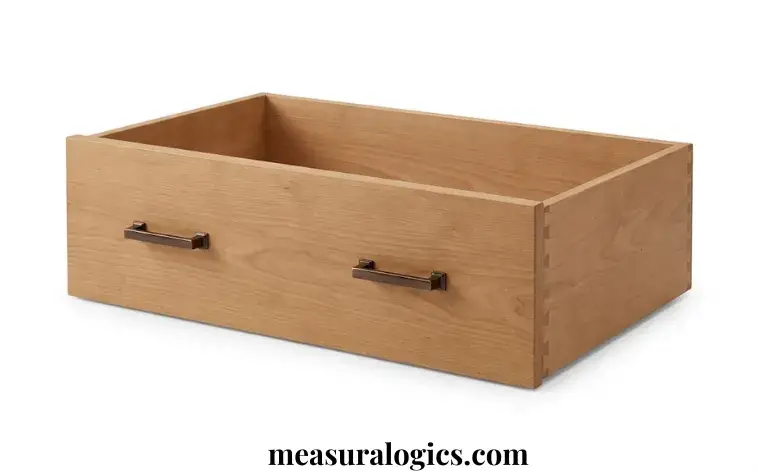
Some large furniture drawers measure approximately 24 inches from front to back or across the front. The exact measurement depends on the furniture design and the drawer’s position.
Dressers, storage cabinets, and workbenches often use drawers of different sizes. A wide drawer may measure two feet across, while a deeper drawer could approach two feet from front to back.
When measuring a drawer, decide which dimension you want to compare. The drawer’s front width is different from its interior depth. Also, the cabinet’s exterior dimensions may be larger than the drawer itself.
A two-foot drawer can provide a useful reference when organizing clothes, office supplies, tools, or kitchen equipment. It also helps you estimate the amount of storage space available.
Because drawer sizes vary, do not assume every large drawer measures 24 inches. Use a tape measure or product specifications to confirm the dimensions.
11. A Medium Suitcase

Many medium-sized checked suitcases stand around 24 inches tall. This makes a suitcase a familiar reference for travelers who want to picture a two-foot measurement.
Suitcase dimensions usually include height, width, and depth. Some manufacturers include the wheels and handles in the overall height, while others present dimensions differently. Always check the product’s measurement details.
A suitcase measuring 24 inches tall is not necessarily 24 inches wide or deep. Its overall shape is three-dimensional, so the correct dimension matters when comparing it with a straight two-foot length.
This example is especially useful when thinking about luggage storage. You can compare the suitcase’s height with a closet shelf, car trunk opening, or storage area.
Not all medium suitcases share the same measurements. Check the listed dimensions before using one as an exact measurement reference.
12. A Compact Computer Desk

Some compact computer desks have a depth of approximately 24 inches. Depth is measured from the front edge of the desktop to the back edge, rather than from one side to the other.
This dimension can provide a helpful example of two feet in a home office. A desk with a 24-inch depth may offer space for a monitor, keyboard, mouse, and other small accessories, depending on its width and layout.
Desk depth is important because it affects how much room you have between yourself and the screen. A shallow desk may feel crowded if you use a large monitor or several accessories.
However, not every compact desk is 24 inches deep. Some are narrower, and others extend farther from the wall. Check the dimensions before deciding whether a particular desk will fit your workspace.
If your desk is exactly two feet deep, measure from its front edge to its back edge. That distance gives you a practical visual example of 24 inches.
13. A Large Garden Saw

Some large garden saws and pruning tools measure close to 24 inches in total length. They are used to cut branches, trim shrubs, and maintain trees, depending on the blade design.
When checking a saw’s length, distinguish between the blade and the complete tool. A product may advertise the blade length without including the handle. The total length from the tip of the blade to the end of the handle can be different.
This matters when using a garden saw to visualize two feet. A saw with a 24-inch blade may be considerably longer overall, while a tool measuring 24 inches in total may have a much shorter blade.
For an accurate comparison, check the manufacturer’s stated overall length or measure the entire tool. Handle the blade carefully while measuring, and keep it away from children.
A verified 24-inch garden saw can provide a useful reference for outdoor tools. However, describe it as an approximate example unless its complete length has been confirmed.
14. An Extra-Large Baking Sheet
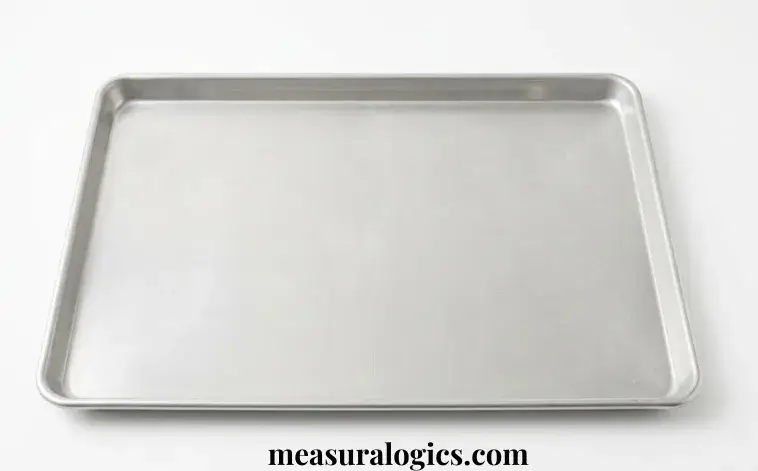
Some commercial baking sheets measure around 24 inches along their longest side. These larger trays are used in professional kitchens, bakeries, and food preparation areas.
A baking sheet’s length is measured across its longest edge. Its width is the shorter side, while the raised rim adds a small amount to its overall dimensions.
Home baking sheets are often smaller than commercial versions. Therefore, a typical household tray should not automatically be treated as a 24-inch example.
A verified two-foot baking sheet can help you picture how much counter or oven space a long tray might occupy. It can also serve as a comparison when planning food preparation areas or selecting storage racks.
Always check the tray’s exterior dimensions before purchasing it. Oven interiors also vary, so the tray’s length alone does not establish whether it will fit.
15. A Floating Wooden Shelf
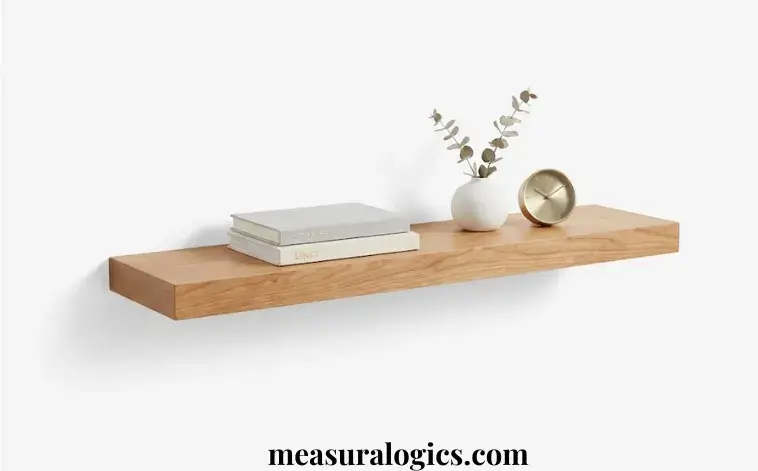
A floating wooden shelf measuring 24 inches long is another useful way to visualize two feet. These shelves attach to a wall with concealed or minimally visible supports, creating a clean appearance.
People use them to display small plants, books, photographs, and decorative accessories. A 24-inch shelf can suit a small wall area, although the amount of usable space depends on its depth and design.
The length is measured from the shelf’s left end to its right end. The depth describes how far it extends from the wall, while thickness refers to the vertical dimension of the board.
Floating shelves are available in many standard sizes, including two-foot lengths. Still, verify the manufacturer’s measurements before using one as an exact reference.
If you are installing a shelf, also consider its weight capacity and the type of wall support required. A shelf’s length does not determine how much weight it can safely hold.
16. A Short Curtain Rod

Some short curtain rods are designed for windows or narrow spaces around 24 inches wide. These rods can help you picture a two-foot distance in a bedroom, bathroom, or small utility area.
Curtain rods are available in fixed and adjustable lengths. An adjustable rod may extend across a range of measurements, so its actual length depends on the setting.
The rod’s length is generally measured from end to end, but decorative finials may affect the total overall dimension. For a precise fit, check whether the listed size refers to the rod alone or includes its end pieces.
A 24-inch curtain rod can be a useful example when planning a small window treatment. Measure the window and allow for the mounting hardware before purchasing a rod.
Do not assume that every short curtain rod measures exactly two feet. Confirm the product’s specifications if you want to use it as a reliable reference.
17. A Two-Foot Metal Pipe

A metal pipe cut to 24 inches provides an exact example of an object that measures two feet. Unlike furniture and household products, a pipe can be cut to a specified length for a particular project.
Metal pipes are used in plumbing, construction, industrial equipment, and many repair tasks. Their materials and diameters vary depending on their intended application.
To measure a 24-inch pipe, measure along its length from one end to the other. Its diameter is a separate measurement and does not affect the pipe’s stated length.
A two-foot pipe section is useful for demonstrating a straight-line distance. You can place it beside a ruler or measuring tape to confirm the measurement.
If you need a pipe for a real project, remember that the required material and diameter depend on its purpose. Do not select a pipe based on length alone.
This example is particularly reliable when the pipe has been cut and measured to exactly 24 inches.
Also Read : How Long 40 Inches? 14 Everyday Objects That Help You Visualize It
How Big Is 24 Inches Visually?
Twenty-four inches is about the length of a two-foot measuring stick. Imagine placing two 12-inch rulers end to end. The combined distance gives you a clear picture of this measurement.
You can also visualize it using familiar objects, such as a two-foot shelf or a verified 24-inch tool. However, remember that an object’s advertised measurement may refer to its width, height, depth, or diagonal.
For a quick comparison, use these references:
- One foot: 12 inches
- Two feet: 24 inches
- Half a yard: 18 inches, so 24 inches is 6 inches longer
- One meter: 39.37 inches, so 24 inches is shorter than a meter
These comparisons make it easier to estimate lengths when you do not have a ruler nearby.
How to Measure 24 Inches Without a Measuring Tape
You can estimate two feet with a few simple household methods.
- Use two rulers: Place two standard 12-inch rulers end to end. Their combined length is exactly 24 inches.
- Use a two-foot measuring stick: If you have one, it provides a direct reference.
- Check a labeled object: A shelf, level, or pipe with verified 24-inch dimensions can help.
- Compare with a known measurement: If you know an object’s exact length, use it as a reference rather than guessing.
- Confirm with a tape measure: For furniture installation, construction, or cutting materials, use an actual measuring tool.
Visual comparisons are helpful for rough estimates. They should not replace accurate measurements when precision matters.
24 Inches in Feet, Centimeters, and Meters
Converting inches into other units helps you understand the same length in different measurement systems.
| Conversion | Result |
|---|---|
| 24 inches in feet | 2 feet |
| 24 inches to cm | 60.96 cm |
| 24 inches in centimeters | 60.96 centimeters |
| 24 inches in meters | 0.6096 meters |
| 24 inches in millimeters | 609.6 mm |
To convert inches to feet, divide the number of inches by 12. Therefore, 24 divided by 12 equals 2 feet.
To convert inches to centimeters, multiply the measurement by 2.54. For 24 inches, the calculation is 24 × 2.54 = 60.96 centimeters.
To convert inches to meters, divide the centimeter result by 100. This gives 0.6096 meters.
These formulas work for any inch measurement, making them useful for furniture, household projects, and general measurements.
Frequently Asked Questions
1. How long is 24 inches?
Twenty-four inches equals exactly 2 feet, 60.96 centimeters, or 0.6096 meters. It is a common dimension for shelves, tools, and some household products.
2. What item is 24 inches long?
Two standard 12-inch rulers placed end to end measure exactly 24 inches. Other examples include a two-foot carpenter’s level and a metal pipe cut to that length.
3. What does 24 inches look like?
Imagine a straight line measuring two feet. Two standard rulers placed end to end provide a simple visual reference for this distance.
4. How big is 24 inches compared to an object?
A verified 24-inch wall shelf or carpenter’s level can help you visualize the measurement. A 24-inch computer monitor is different because its screen size is measured diagonally.
5. How big is 24 inches in feet?
Twenty-four inches equals exactly 2 feet. Divide 24 by 12 because each foot contains 12 inches.
6. How many centimeters are in 24 inches?
There are exactly 60.96 centimeters in 24 inches. Multiply 24 by 2.54 to convert inches into centimeters.
7. Is 24 inches the same as 2 feet?
Yes. One foot equals 12 inches, so two feet equal 24 inches.
8. What household items are about 24 inches long?
Some wall shelves, cutting boards, furniture drawers, curtain rods, and compact desk surfaces have dimensions close to 24 inches. Exact sizes vary by product.
9. Is 24 inches half a yard?
No. Half a yard equals 18 inches. Twenty-four inches is two-thirds of a yard, approximately.
10. How can I measure 24 inches without a ruler?
You can use two standard 12-inch rulers, a verified two-foot object, or a measuring stick. For precise work, confirm the distance with a measuring tape.
Conclusion
Twenty-four inches equals two feet, making it a useful measurement for everyday objects, furniture, and home projects. Two standard rulers, a carpenter’s level, a wall shelf, and a measured metal pipe can help you visualize this distance.
Remember that product dimensions vary. Some objects measure exactly 24 inches, while others only come close. Check the actual measurements whenever accuracy matters.
If you want to compare a shorter measurement, explore our related guide to things that are 20 inches long. Add your specific 20-inch article URL to this anchor text before publishing.

I am Dr. Muhammad Zubair, a mathematician, researcher, and educator with a Ph.D. in Mathematics and postdoctoral research. My research work has been published in reputable, peer-reviewed international journals a reflection of my continued commitment to academic excellence and the advancement of mathematical knowledge. And I am a also experienced blogger at Measura Logic, focusing on all aspects of measurements.