
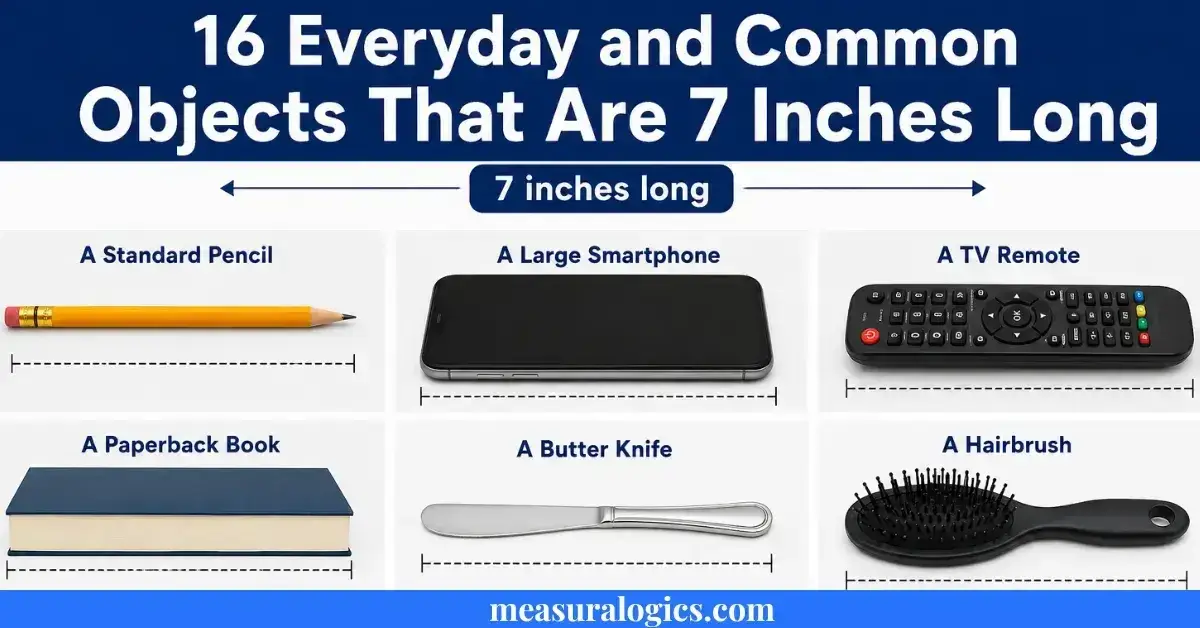
Have you ever tried to picture a measurement just by hearing the number? It’s harder than it sounds. When someone says “7 inches,” your brain needs a real object to compare it to before the number actually means anything. That’s exactly what this guide gives you.
Knowing how long 7 inches is can help with many everyday tasks. You might be shopping online for a gadget, measuring space for a shelf, working on a DIY project, or simply curious after seeing the number somewhere. Either way, seeing real objects that are 7 inches long makes the measurement easy to picture instantly, without needing a ruler in your hand.
Most people are used to thinking in rough categories like “small,” “medium,” or “large.” But these categories mean different things to different people. One person’s idea of medium might be another person’s idea of small. That’s why using specific, familiar objects works so much better than vague size labels.
By the end, you won’t just know the number 7 inches. You’ll have a mental image you can call on any time you come across this measurement again, whether you’re reading a product listing, following a recipe, or helping a child with a school project. This kind of practical knowledge sticks with you far longer than a plain number ever could, and it makes everyday measuring decisions much faster and more confident.
7-Inch Conversion Chart
Before we look at real objects, let’s break down the number itself. Seven inches is a medium-sized measurement, right in the middle of most everyday size ranges. It’s longer than your thumb, longer than a credit card, but noticeably shorter than a standard 12-inch ruler.
In the metric system, 7 inches equals 17.78 centimeters. That’s roughly the width of a small paperback book or a folded hand towel. If you’re measuring in feet, 7 inches works out to about 0.58 feet, or a little more than half a foot. In millimeters, that same length becomes 177.8 mm, a number you’ll often see on product specification sheets for electronics or tools.
Understanding these conversions matters more than people expect. Many online stores, especially international ones, list product sizes in centimeters or millimeters instead of inches. If you’re used to thinking in inches, this can get confusing fast. Having a quick conversion chart handy removes that guesswork completely.
This conversion chart makes it easy to switch between the most common units:
| Unit | Value |
|---|---|
| Inches | 7 in |
| Centimeters | 17.78 cm |
| Millimeters | 177.8 mm |
| Feet | 0.583 ft |
| Yards | 0.194 yd |
| Meters | 0.178 m |
Notice how the numbers change depending on the unit, but the actual physical length never changes. This is an important idea to understand. A product that says “17.78 cm” and one that says “7 inches” are exactly the same size, just written differently for different audiences.
This chart is especially useful for shoppers comparing products from different countries. A phone listed at “17.78 cm tall” from a European store is the exact same size as one listed at “7 inches tall” from a US store. Keeping this chart in mind saves you from ordering something the wrong size simply because of a unit mix-up. It’s a small habit that prevents a lot of returns and disappointment.
Everyday Objects That Measure About 7 Inches
So, how big is 7 inches in real life? The easiest way to truly understand it is through objects you already own and use every single day. Many common household items land close to this exact length, often without you ever noticing.
Think about a standard dinner fork sitting in your kitchen drawer, a TV remote resting on your coffee table, or a large smartphone in your pocket. All of these hover right around 7 inches. This is exactly why 7 inches is often described as a “medium-sized measurement.” It’s not too short, like a coin or a spoon handle, and it’s not too long, like a full-sized ruler or a shoe.
Using real, familiar objects as size references is one of the most effective tricks for estimating length accurately. Once you memorize a few reliable 7 inch objects, your brain automatically uses them as a mental yardstick. From that point forward, comparing any new object becomes much faster and far more accurate than guessing blindly.
This skill becomes especially useful in situations where a measuring tool isn’t available. Picture yourself in a store, deciding whether a picture frame will fit on a shelf. Or imagine packing a suitcase and needing to know if an item will fit in a side pocket. In both cases, recalling a familiar 7 inch object gives you an instant, reliable answer.
Just How Big Is 7 Inches?
Let’s put this measurement into even more everyday context. Seven inches is close to the length of an adult hand span, measured from the tip of the thumb to the tip of the pinky finger when the hand is stretched wide open. This makes your own hand one of the most convenient built-in measuring tools you’ll ever carry.
If you place two standard dollar bills end to end, minus a small overlap, you’d land very close to 7 inches. It’s longer than most eyeglasses cases, which are usually closer to 6 inches, but noticeably shorter than a standard shoebox, which often runs closer to 12 or 13 inches.
Picture a 7 inch size comparison chart forming in your mind: a pencil, a spoon, and a small paperback book laid side by side on a table. Seven inches sits comfortably in the middle of that visual range, longer than the spoon but roughly matching the book’s height.
This measurement also comes up constantly in technology. Small tablets are often marketed by their 7 inch screen size, and many e-readers fall into this same range. Understanding this helps when comparing devices, since screen size directly affects how comfortable a gadget feels to hold and use.
Once you start noticing it, you’ll realize 7 inches is everywhere. It’s not an unusual or rare measurement at all. It’s a length your hands, eyes, and daily routines already interact with constantly, even if you’ve never stopped to think about the exact number before reading this guide.
16 Things That Are Roughly 7 Inches Long
Now let’s get to the most practical part of this guide. Below are 16 everyday objects that are close to 7 inches long. Some of these are things that are exactly 7 inches, while others are simply very close, usually within half an inch either way.
Each of these examples was chosen because it’s something most people already own or interact with regularly. Instead of memorizing an abstract number, you can now picture a fork, a phone, or a paperback book, and instantly know roughly how long 7 inches really is.
As you read through this list, try picking two or three objects that feel the most familiar to you personally. Everyone’s daily environment is different, so the object that clicks best for a student might be different from the one that clicks for someone who cooks often. Choose the references that make the most sense in your own life, since those are the ones you’ll actually remember and use later.
1. A Standard Pencil
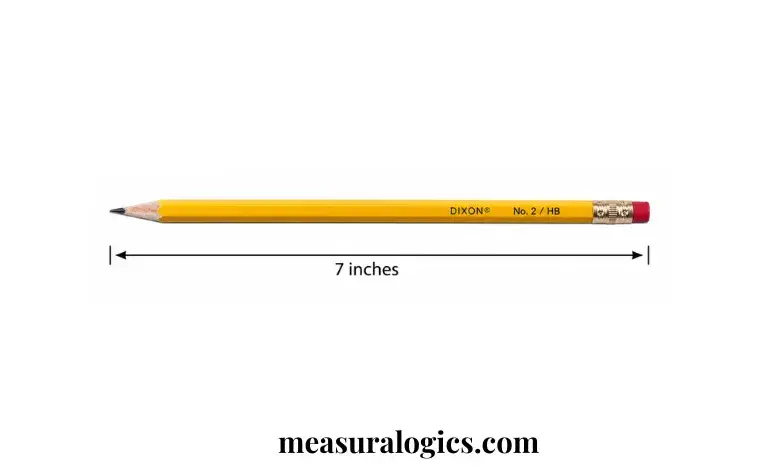
A brand-new, unsharpened pencil is usually about 7.5 inches long, straight out of the box. After some regular use and sharpening, it often shrinks down to right around 7 inches. This makes a slightly used pencil one of the easiest and most universally recognized examples of this length, since almost everyone has handled one recently.
2. A Large Smartphone
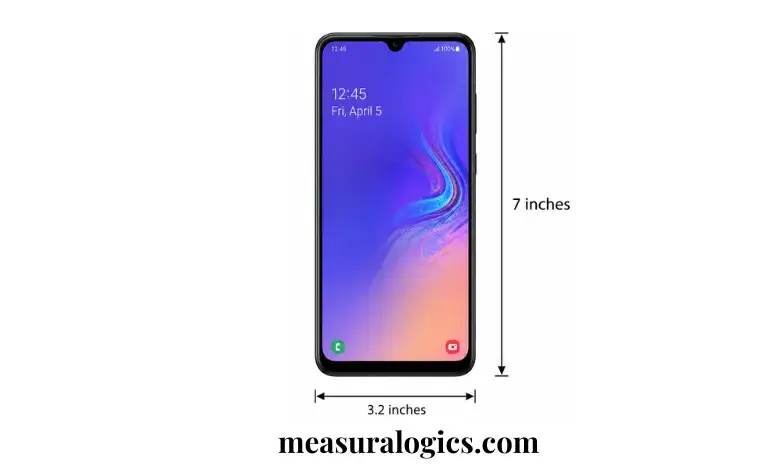
Many large smartphones measure close to 6.5 to 7 inches tall, especially models marketed as “plus” or “max” sized. Phones with bigger screens, often nicknamed “phablets,” land right in this range, especially once you include the thickness added by a protective case.
3. A TV Remote
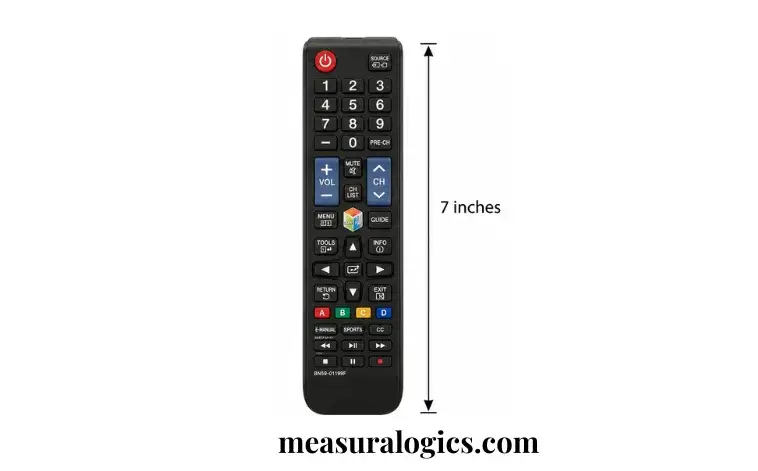
Most television remotes fall somewhere between 6 and 8 inches long, depending on the brand and number of buttons. A medium-sized remote, the kind found on most living room coffee tables, is a solid and reliable 7 inch object that almost every household has within reach.
4. A Paperback Book

The average paperback novel is close to 7 inches tall, particularly mass-market editions sold in bookstores and airports. Next time you pick one up, hold it next to your hand and notice how closely it matches. It’s one of the most consistent visual references available.
5. A Hairbrush
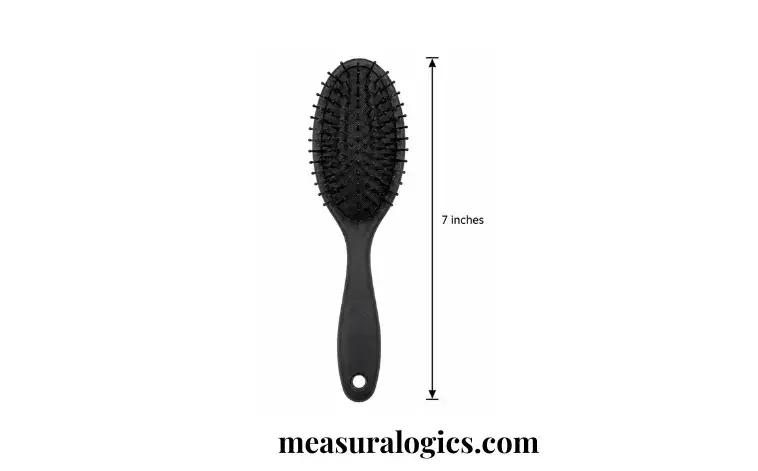
Many hairbrushes, especially smaller round or paddle-style brushes, measure close to 7 inches from the top of the bristles to the bottom of the handle. This makes hairbrushes a familiar bathroom-based comparison that most people can picture without even looking.
Also Read: 16 Common Objects That Are 6 Inches Long
6. A Small Tablet Screen
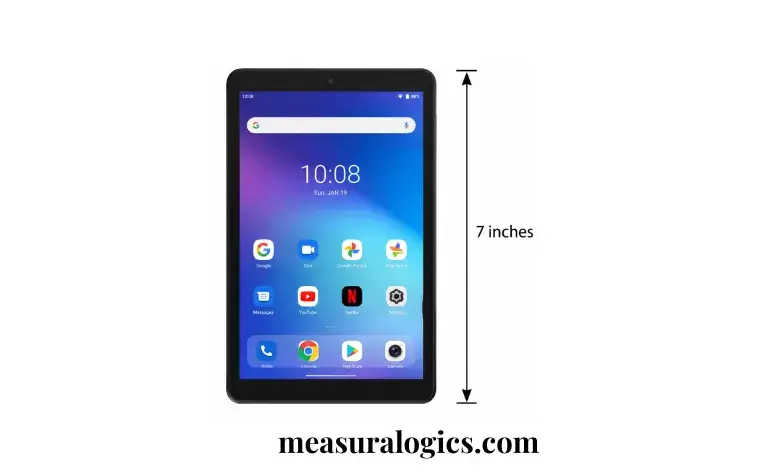
Small tablets, often marketed as “mini tablets,” have screens close to 7 inches when measured diagonally from corner to corner. This is actually where the “7 inch” label comes from in many tech product names and advertisements you may have seen online.
7. The Width of a Notebook

A standard notebook is often close to 7 inches wide, especially smaller composition-style notebooks used for school assignments or personal journaling. This makes notebooks a handy classroom or office-based reference point.
8. A Dinner Fork
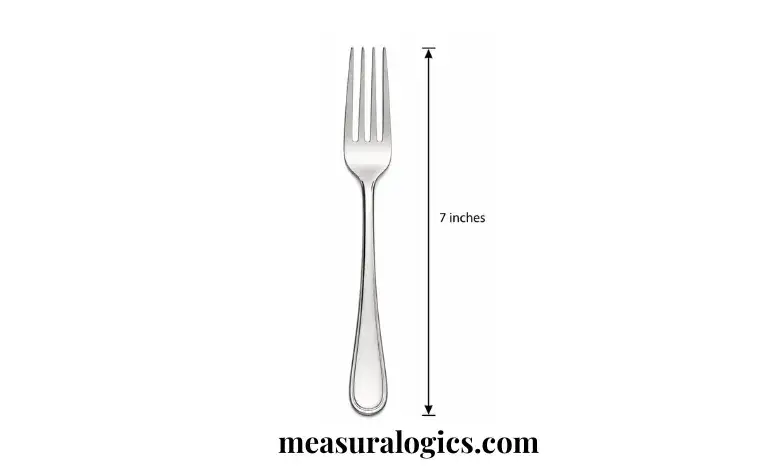
Most dinner forks measure between 7 and 7.5 inches long, from the tip of the tines to the end of the handle. Next time you set the table for dinner, take a quick look. It’s one of the most common 7 inch objects found in any kitchen.
9. An Adult Hand Span
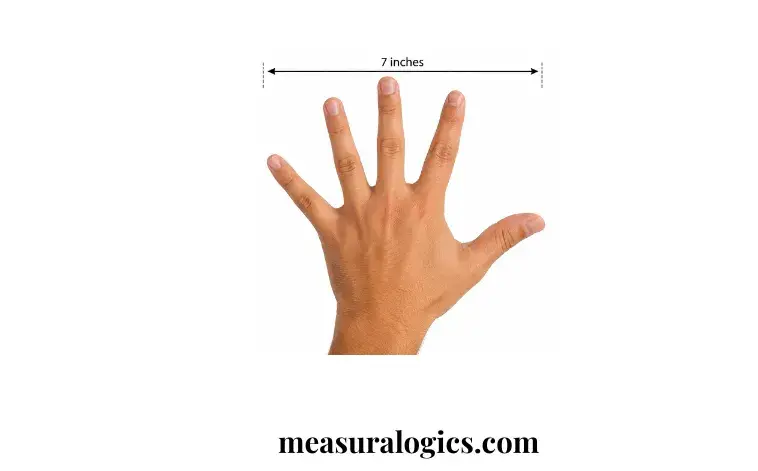
7 inches compared to hand size is a classic and highly practical reference. A stretched adult hand, measured from the thumb tip to the pinky tip, is often close to 7 to 9 inches, depending on the individual’s hand size and finger length.
10. The Blade of a Kitchen Spatula

The flat blade portion of a standard kitchen spatula, not counting the handle, is often close to 7 inches long. This makes spatulas another easy kitchen-based comparison for anyone who cooks regularly at home.
11. A Small Ruler
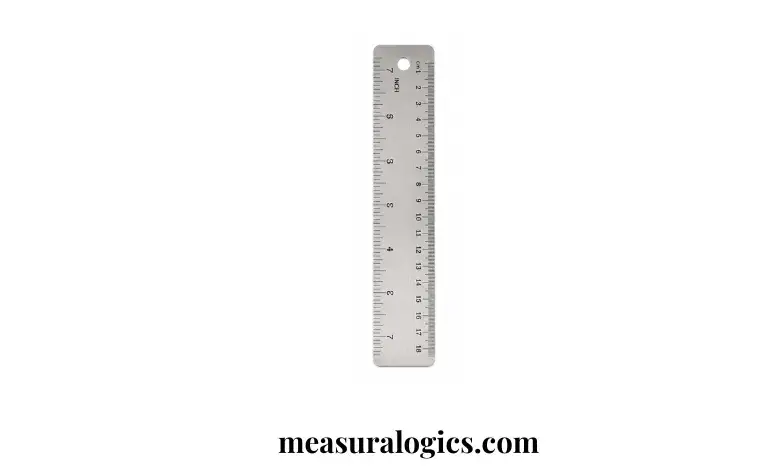
While most classroom rulers measure 12 inches, smaller travel-sized or pencil-case rulers are often exactly 7 inches long. These compact rulers are especially popular for students who need something that fits easily inside a backpack or pencil pouch.
12. An Open Wallet
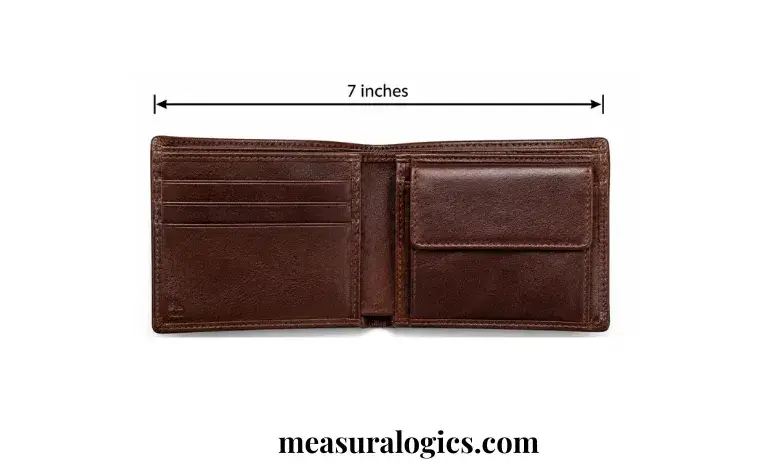
A standard bifold wallet, when fully opened flat on a table, often measures close to 7 inches across from edge to edge. This detail is especially useful when comparing wallet sizes while shopping online, where photos alone can be misleading.
13. The Shaft of a Screwdriver

Many standard screwdrivers have a shaft, not including the handle, that measures close to 7 inches long. This length can vary depending on the tool’s specific use, but it remains a common and reliable size across many toolboxes.
14. A Dessert Plate’s Diameter
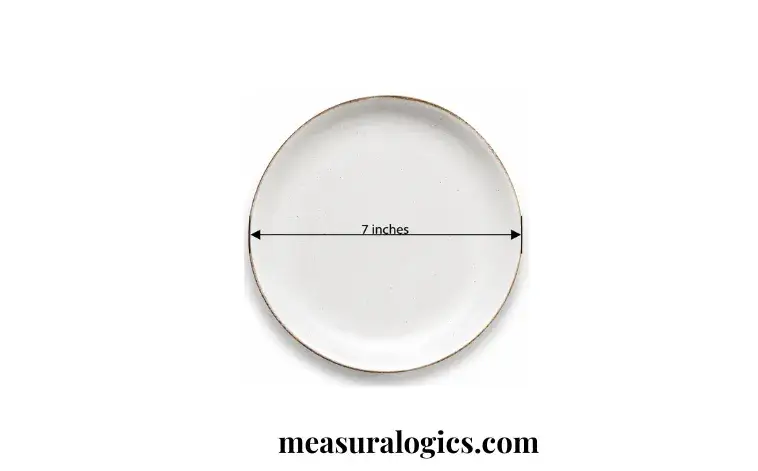
Small dessert or salad plates often have a diameter close to 7 inches, noticeably smaller than a standard 10 or 11-inch dinner plate. This makes dessert plates a helpful reference for anyone thinking about circular measurements specifically.
15. A Sunglasses (folded)

When fully opened and laid flat, most sunglasses measure close to 7 inches from one end to the other, including both arms extended outward. This makes sunglasses a surprisingly accurate everyday comparison tool.
16. A Butter Knife
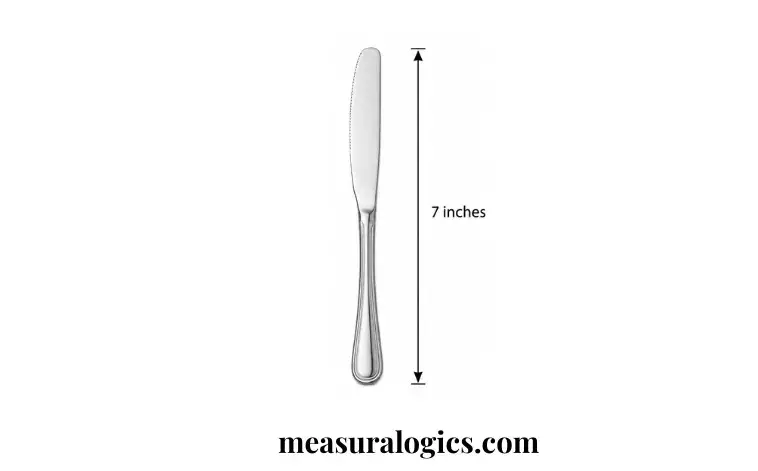
A standard butter knife, commonly used at the dinner table for spreading, typically measures close to 7 inches from tip to handle end. Slightly shorter than a full dinner knife, it remains one of the most familiar and frequently handled 7 inch objects in any home.
Why Estimating Measurements Doesn’t Have to Be Hard
Estimating length often feels intimidating, especially for people who consider themselves “bad at math” or “bad with numbers.” But estimating everyday measurements really doesn’t need to be difficult at all. Once you memorize a handful of reliable 7 inch objects, you effectively build a mental ruler that you carry with you everywhere, without any extra effort.
This skill proves useful far more often than people expect. Shopping online becomes significantly easier once you can accurately picture product dimensions instead of just reading numbers on a screen. A listing that says “7 inches” suddenly means something concrete, rather than just an abstract figure you have to trust blindly.
DIY projects also go much more smoothly with this kind of mental reference library. Instead of walking back and forth to grab a tape measure every few minutes, you can make quick, confident size decisions on the spot. This saves time and keeps your work flowing without constant interruptions.
The real trick behind all of this is repetition combined with relevance. The more often you compare real, familiar objects to known measurements, the faster and more naturally your brain learns to estimate sizes accurately. Eventually, this becomes so automatic that you won’t even need a ruler for most quick, everyday guesses.
Ultimately, estimating measurements is a skill, not a talent you’re born with. Like any skill, it improves steadily with practice. The 16 objects listed earlier in this guide are a great starting point for building that skill in a way that feels natural and genuinely useful in daily life.
How to Estimate 7 Inches Without a Ruler
No ruler nearby? That’s completely fine. Your own body is actually full of built-in measuring tools you can rely on. Your hand span, for example, is a great stand-in for measuring 7 inches on a ruler, especially once you know your personal hand span measurement exactly.
You can also lean on common everyday objects as a reliable backup method. A standard dollar bill is about 6.14 inches long, so 7 inches ends up being just a little bit longer than that. A standard smartphone, held vertically in your hand, also gets you very close to this same target length.
Another helpful trick involves combining smaller, already-known lengths together. Two average-sized AA batteries placed end to end come close to 4 inches total. Add the width of a thumb, roughly 1 inch, and a few more small items, and you’re steadily approaching the full 7 inch mark through simple addition.
Some people also use body proportions beyond just the hand. The length from your wrist to your elbow, for many adults, sits somewhere close to 9 to 10 inches, which can help you estimate downward toward 7 inches with a bit of practice and mental adjustment.
Household items work well too. A standard butter knife or a small paperback book, when available, offers a quick, physical comparison point you can hold directly next to whatever you’re trying to measure, without needing any tools at all.
With enough practice, these estimation tricks become second nature. You’ll start judging sizes accurately almost instinctively, even without any measuring tools physically in your hand. This kind of practical skill becomes especially valuable while traveling, shopping, or working on quick projects where stopping to find a ruler simply isn’t convenient or realistic.
Common Myths About 7 Inches, Debunked
Myth 1: All 7-inch tablets have the exact same screen size.
This isn’t quite true. Screen sizes are measured diagonally from corner to corner, so differences in shape and aspect ratio can affect how large or small the screen actually looks, even when two tablets share the same official measurement.
Myth 2: 7 inches always equals a specific, round number of centimeters.
It’s close, but not perfectly round. Seven inches equals exactly 17.78 centimeters, not simply 18 cm, though many people round it up for convenience when doing quick mental math.
Myth 3: A hand span is always exactly 7 inches for every adult.
Hand size varies significantly from person to person. While 7 inches is a common average for many adults, hand spans typically range anywhere from 6 to 9 inches, depending on age, gender, and individual body proportions.
Myth 4: 7 inches is a rarely used, uncommon measurement.
In reality, it’s far more common than most people assume. Many everyday objects, from dinner forks to butter knives to TV remotes, land close to this exact size without anyone ever really noticing the pattern.
Myth 5: You need a measuring tool to estimate 7 inches accurately.
As shown earlier in this guide, that’s simply not true. Hand spans, dollar bills, and familiar household objects can all provide a fairly accurate estimate without ever needing to pull out an actual ruler or tape measure.
FAQs
What is 7 inches in cm?
7 inches equals 17.78 centimeters. This is calculated by multiplying the number of inches by 2.54, which is the standard conversion factor between the two units.
What is 7 inches in feet?
7 inches is about 0.58 feet, or just a little more than half a foot, making it a useful reference when working with larger measurements around the home.
What everyday object is closest to 7 inches?
A dinner fork or a standard pencil are two of the closest and most commonly recognized examples, since nearly everyone has handled both recently.
How big is 7 inches compared to a hand?
It’s close to the average adult hand span, measured from the thumb tip to the pinky tip when the hand is stretched wide open.
Is 7 inches considered a big or small measurement?
It’s generally considered medium-sized. It’s larger than small items like coins or paperclips, but smaller than longer items like rulers, shoes, or laptops.
Conclusion
Understanding how long is 7 inches becomes much easier once you connect the number to real, familiar objects instead of trying to picture it abstractly. From a standard pencil to a dinner fork to a butter knife, these everyday items give you a clear, dependable mental picture you can recall instantly.
We covered the basic conversion chart, several real-life comparisons, and 16 common objects that are close to 7 inches long, including kitchen tools, tech gadgets, and household items you likely already own. We also explored simple, practical tricks for estimating this length without a ruler, plus a handful of common myths worth clearing up once and for all.
The next time you come across a measurement like 7 inches, whether while shopping, cooking, or working on a DIY project, you won’t need to guess or feel unsure. Picture your own hand span, a TV remote, or a paperback book, and you’ll have a clear, accurate, and confident sense of exactly how big that size really is.
Want to measure other lengths with the same ease and confidence? Explore more of our size comparison guides to keep building your everyday measurement skills, one familiar object at a time.
Related post : 17 Common Things That Are 5 Inches Long

I am Dr. Muhammad Zubair, a mathematician, researcher, and educator with a Ph.D. in Mathematics and postdoctoral research. My research work has been published in reputable, peer-reviewed international journals a reflection of my continued commitment to academic excellence and the advancement of mathematical knowledge. And I am a also experienced blogger at Measura Logic, focusing on all aspects of measurements.