
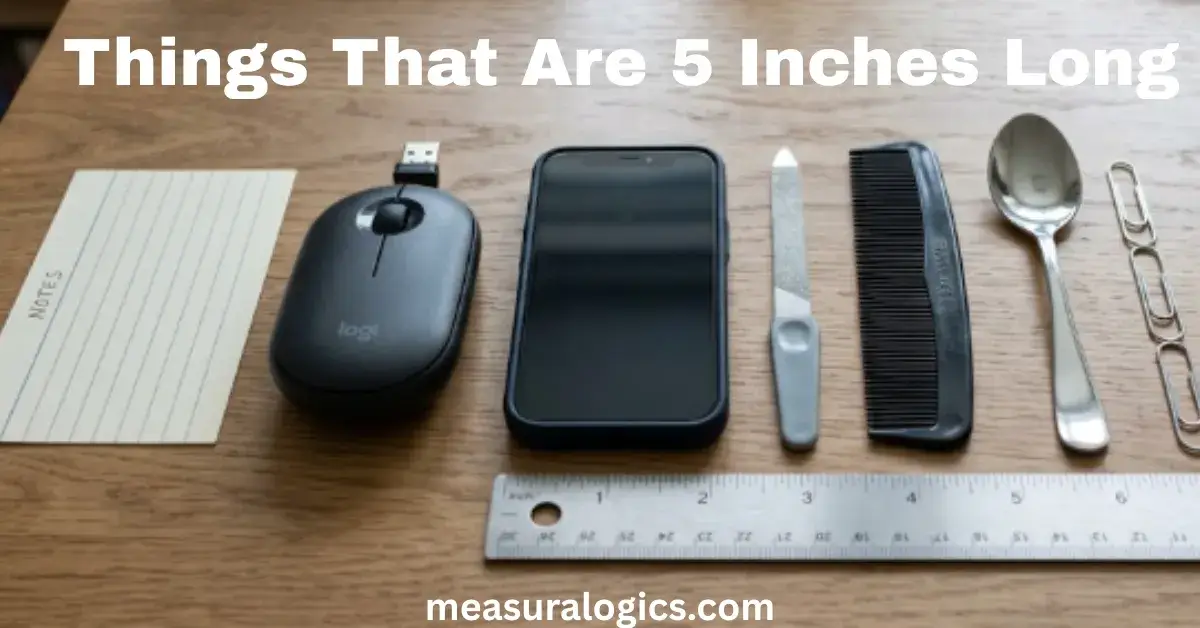
Ever tried to picture a measurement and just blanked? You’re not alone.
Five inches is one of those sizes that sounds simple but is oddly hard to picture in your head. It’s not tiny like an inch. It’s not big like a foot. It sits right in the middle.
The good news is you don’t need a ruler to understand it. You probably have several 5 inch objects sitting on your desk right now.
In this guide you will be know that what things are 5 Inches Long look like using things you already recognize. A computer mouse. A coffee mug. Even your own hand. By the end, you’ll be able to estimate 5 inches almost anywhere, anytime, without measuring a thing.
Let’s break it down.
What Is 5 Inches, Exactly?
Five inches equals 12.7 centimeters, or about one-third of a foot.
That’s the simple math answer. But numbers alone don’t help most people “see” a size.
Here’s a better way to think about it: 5 inches measurement is roughly the length of a dollar bill turned sideways, minus a little. It’s also close to the width of a standard smartphone.
Most rulers show this size clearly between the 5-inch mark and the start of the sixth inch. If you’re looking at a 5 inches ruler line, it sits almost exactly halfway across a standard 12-inch ruler, just shy of the midpoint.
Why Does Knowing 5 Inch Objects Actually Help?
Yes, it genuinely helps in everyday life.
Knowing common 5 inch objects means you can estimate sizes for shopping, DIY projects, packing, and crafts without hunting for a tape measure.
Think about buying a phone case, checking if a gift fits in a box, or figuring out if a gadget fits in your bag. These small estimation skills save time constantly.
Contractors, designers, and shoppers use this trick daily. Instead of measuring everything, they compare it to something familiar. It’s faster, and it’s usually accurate enough for quick decisions.
How Big Is 5 Inches Compared to a Hand?
A 5 inch object is close to the width of an average adult palm.
Not the full hand with fingers extended, just the palm itself, from the base to where the fingers begin.
This comparison works well because your hand is always with you. Next time you need a rough measurement and no ruler is nearby, place your palm against the object. If it lines up closely with your palm’s width, you’re likely looking at close to 5 inches.
Keep in mind hand sizes vary by person, so this works best as a quick estimate, not an exact one.
Also read: How Long Is 10 Inches? 12 Everyday Objects for Easy Comparison
17 Everyday Objects That Are About 5 Inches Long
Here are the clearest 5 inch objects you probably already own or see daily.
Standard Index Card
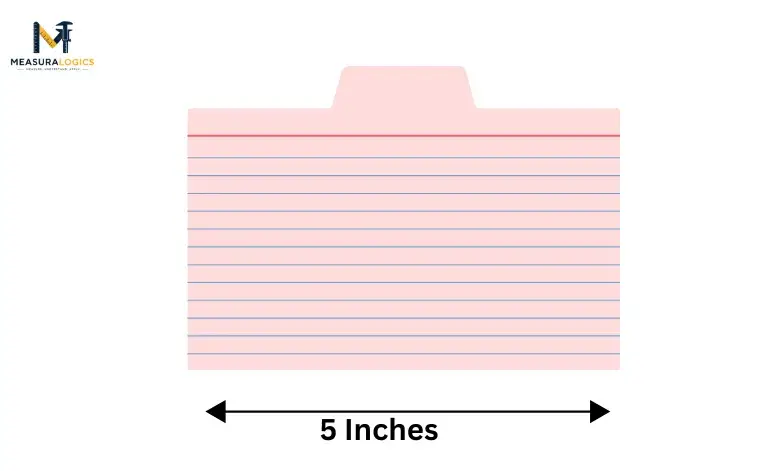
Yes, a standard index card is a reliable reference for 5 inches.
The classic 3×5 index card measures exactly 5 inches on its longer side. This makes it one of the most precise everyday comparisons available, since the size is printed right on the product.
Teachers, students, and office workers already have these lying around, which makes them a handy mental ruler.
Computer Mouse
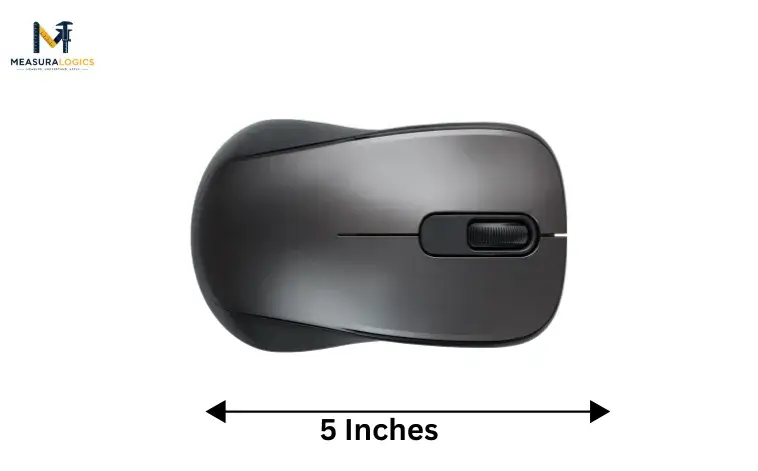
Most computer mice are close to 5 inches long.
A standard desktop mouse typically measures between 4.5 and 5 inches from the front edge to the back. Ergonomic mice can run slightly longer.
Next time you’re at your desk, glance at your mouse. That’s roughly your reference point.
Small or Compact Smartphone

Compact smartphones often measure close to 5 inches in height.
Older iPhone SE models and other compact Android phones fall in this range. Larger modern phones exceed this length, so this comparison works best with smaller or older devices.
If you have an older phone in a drawer, it’s a solid stand-in for this measurement.
Nail File
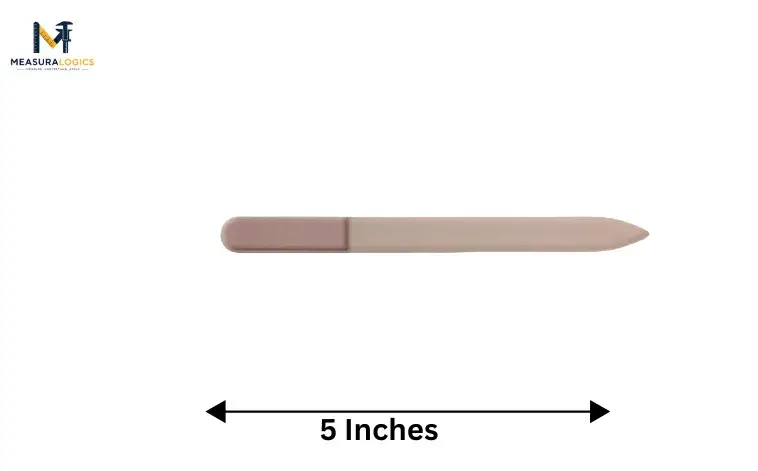
A standard nail file is almost always around 5 inches long.
This makes it one of the most portable 5 inch objects, since most people already carry one in a bag or bathroom drawer.
Emery boards vary slightly, but most fall between 4.5 and 5.5 inches.
Pocket or Travel Comb
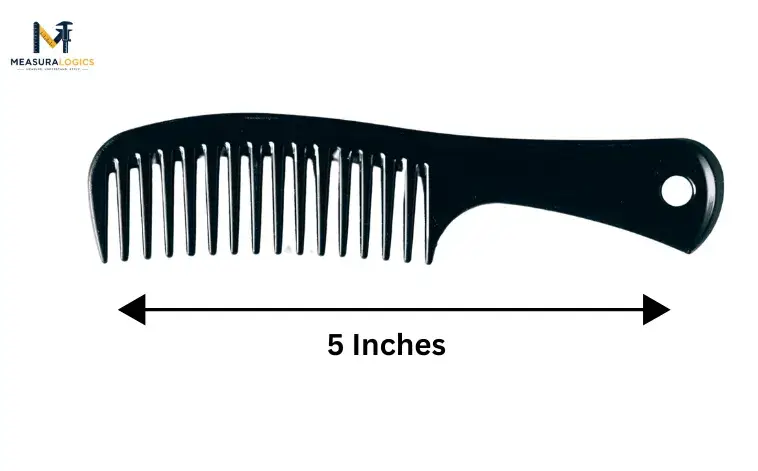
Travel combs are designed to be compact, and most land right around 5 inches.
This size fits neatly into pockets, purses, or gym bags, which is exactly why manufacturers keep it consistent.
Teaspoon
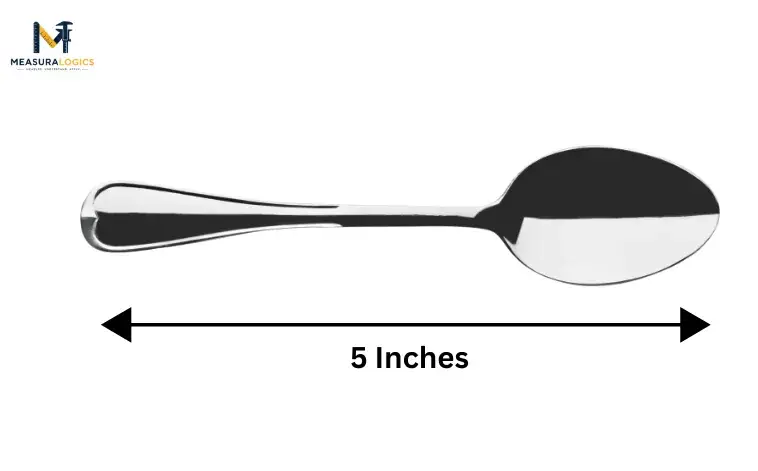
A standard teaspoon, handle included, measures close to 5 inches.
Kitchen teaspoons vary by brand, but most common metal teaspoons fall between 5 and 5.5 inches from tip to handle end.
Five Paper Clips Lined Up
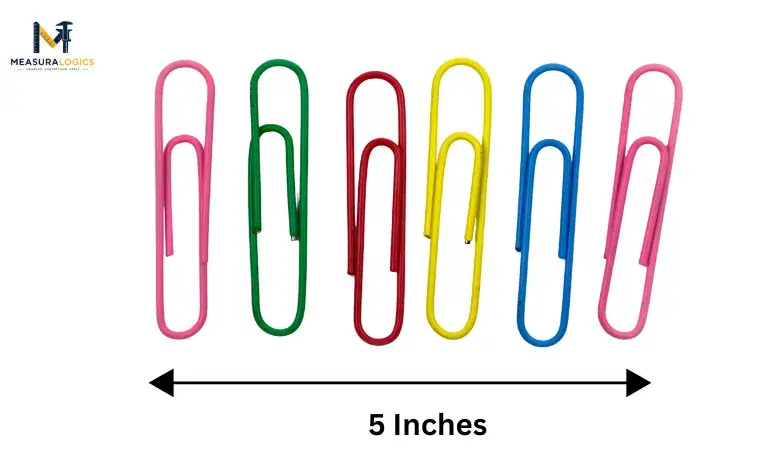
Line up five standard paper clips end to end, and you’ll land close to 5 inches.
Each paper clip measures roughly 1 inch, so this trick works well when you don’t have a single 5 inch object nearby but do have a box of paper clips.
Travel Toothbrush
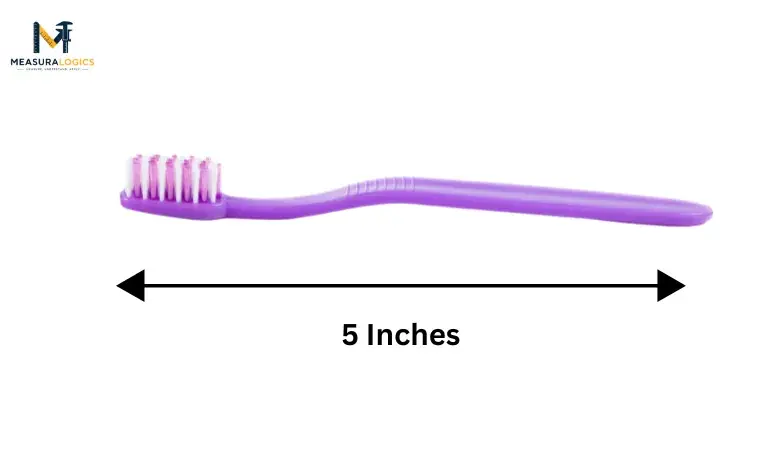
Folded travel toothbrushes typically measure close to 5 inches when closed.
This compact size is intentional, since travel toothbrushes need to fit into small toiletry bags without taking up extra space.
Small Grooming Comb
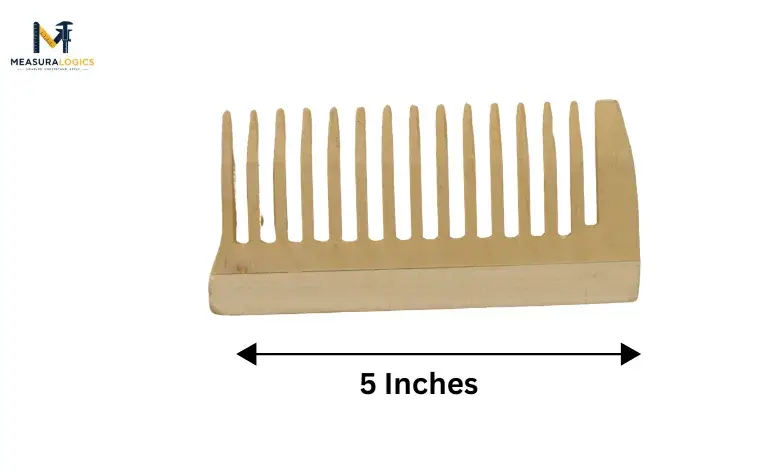
Similar to a travel comb, small grooming combs used for beards or mustaches often measure around 5 inches.
These are shorter than full-size hair combs but longer than pocket combs, sitting right in that middle range.
USB Flash Drive
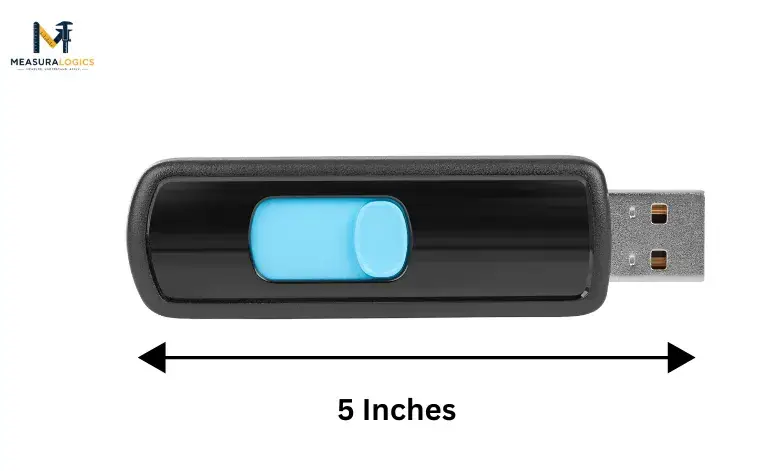
Larger USB flash drives, especially older or novelty-shaped ones, can measure close to 5 inches.
Most modern flash drives are smaller, closer to 2 inches, so this comparison works best with older or larger models.
Small Pocket Notepad
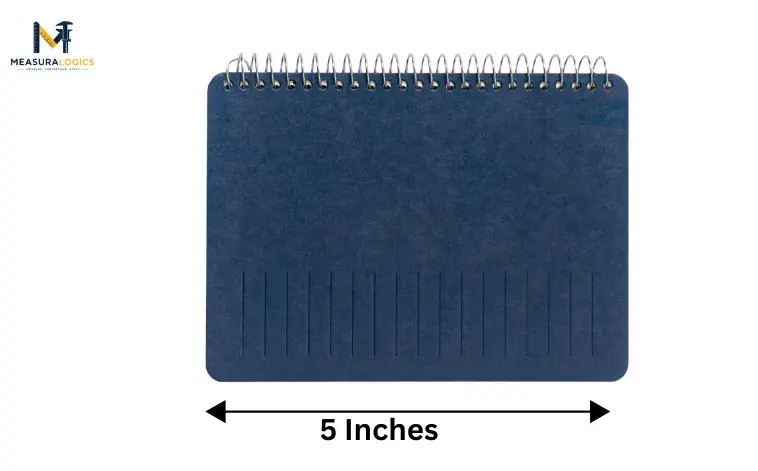
Many pocket notepads measure close to 5 inches in height.
This size is common because it fits comfortably in a jacket pocket or small bag while still leaving room to write.
Standard Coffee Mug
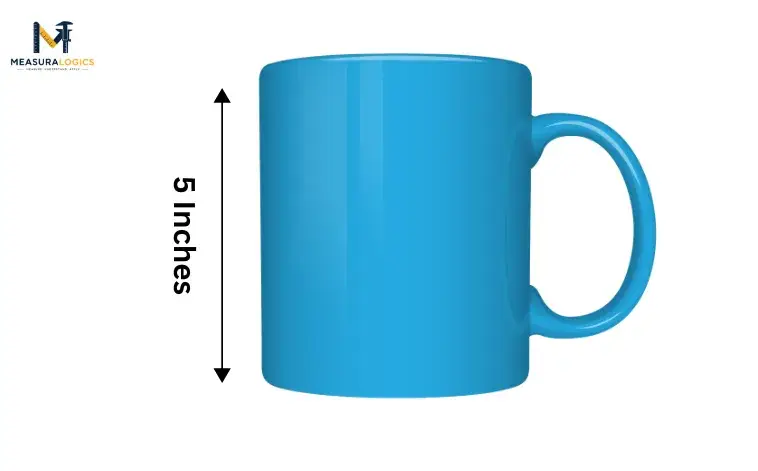
The height of a standard coffee mug is often close to 5 inches, sometimes.
This depends heavily on style. Tall mugs can exceed 5.5 inches, while shorter mugs stay closer to 3.5 or 4 inches. Mid-size mugs land right around the 5 inch mark.
Desk Ruler Section
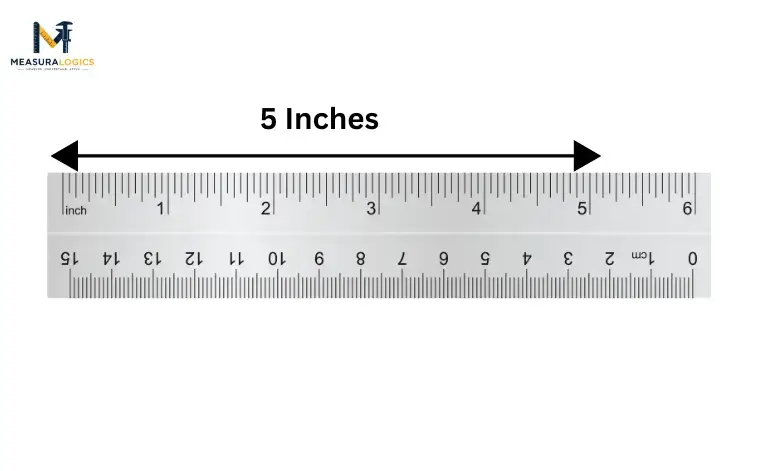
If you have a 12-inch ruler nearby, look at the section from the 0 mark to the 5-inch line.
This is the most direct and accurate way to see the measurement, since it’s exact by design.
TV Streaming Stick
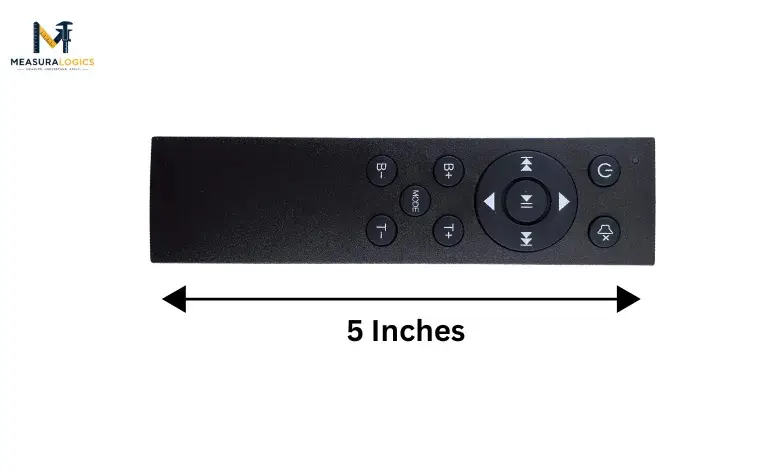
Devices like streaming sticks that plug into a TV’s HDMI port are often close to 5 inches long.
This slim, elongated shape is common across several major streaming brands.
Gaming Controller Grip
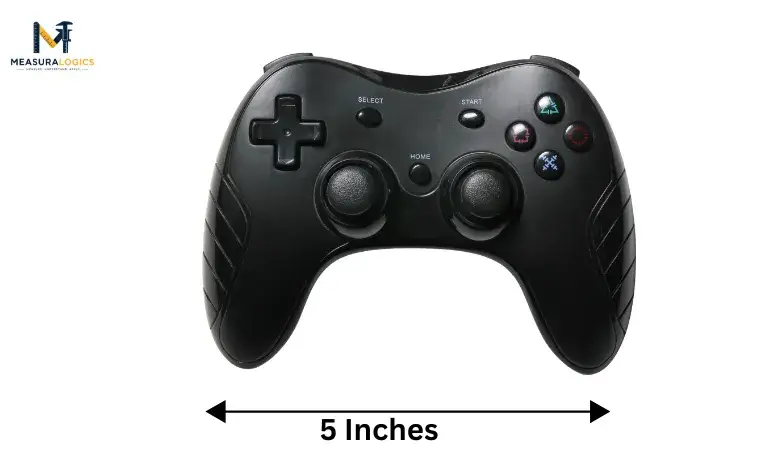
The width of a standard gaming controller, measured across the grips, often comes close to 5 inches.
This varies by console and model, but many popular controllers fall within a half-inch of this size.
Makeup Brush
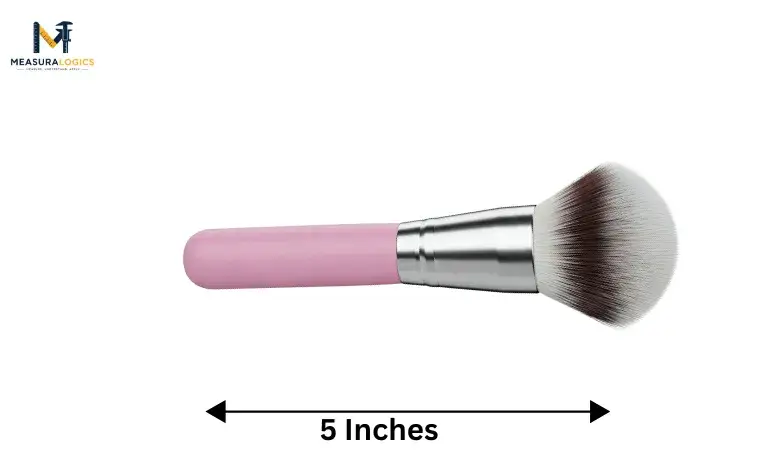
Many makeup brushes, especially foundation or powder brushes, measure close to 5 inches including the handle.
Brush sizes vary widely by brand and purpose, so this works best as a general comparison rather than an exact one.
Toothbrush Handle
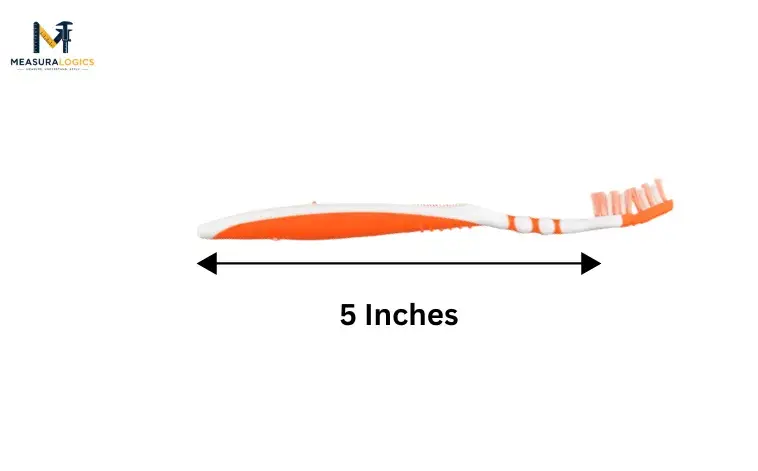
The handle portion of a standard adult toothbrush, not including the bristle head, is often close to 5 inches.
The full toothbrush including bristles usually runs longer, closer to 7 inches total.
Can we Measure 5 Inches Without a Ruler?
Yes, you can estimate 5 inches fairly accurately without any measuring tool.
Here’s a quick step-by-step approach:
- Use your palm width as a rough guide.
- Compare the object to a 3×5 index card if one is nearby.
- Line up five standard paper clips end to end.
- Check if it’s close to the height of a compact smartphone.
- Compare it to the short side of an envelope.
None of these methods are perfectly precise, but combined, they give you a strong, reliable estimate for everyday situations.
Common Mistakes People Make When Estimating 5 Inches
Even careful people slip up here. A few patterns show up again and again.
- Confusing 5 inches with 5 centimeters.
- These are very different sizes, since 5 inches equals nearly 12.7 centimeters.
- Assuming all phones are 5 inches.
- Modern smartphones vary widely and many now exceed 6 inches.
- Using mug height inconsistently.
- Mug sizes vary too much to be a fully reliable reference on their own.
- Ignoring handle length on tools.
- Items like combs or brushes sometimes get measured without their handles, which skews comparisons.
Expert Tips for Better Size Estimation
A few small habits make size estimation noticeably more accurate over time.
- Keep one known 5 inch object, like an index card, somewhere accessible for quick comparisons.
- Double-check important measurements with an actual ruler or tape measure before purchases.
- Remember that object sizes vary by brand, so treat comparisons as estimates, not guarantees.
- Practice comparing sizes regularly. Estimation is a skill that improves with repetition.
Frequently Asked Questions
How long is a 5 inch object compared to a dollar bill?
A U.S. dollar bill is about 6.14 inches long, so 5 inches is slightly shorter than a full bill. It’s close to the bill’s length minus a little over an inch. This makes a dollar bill a decent rough comparison, though not an exact one.
What does 5 inches look like on a ruler?
On a standard 12-inch ruler, 5 inches sits just before the halfway point. It’s the fifth full inch mark from the zero end. Most rulers clearly label this line with a bold number for easy reference.
Is a 5 inch object bigger than a smartphone?
It depends on the phone. Compact or older smartphones are close to 5 inches in height, while most modern phones exceed this size, often reaching 6 inches or more.
How many centimeters are in 5 inches?
Five inches equals approximately 12.7 centimeters. This conversion is useful when comparing measurements across countries that use the metric system instead of inches.
What household item is closest to exactly 5 inches?
A standard 3×5 index card is one of the most precise references, since its 5 inch side is a fixed, manufactured measurement rather than an estimate.
Can I use my hand to measure 5 inches accurately?
Your palm width offers a helpful estimate, since it’s often close to 5 inches for many adults. However, hand sizes vary, so this method works best for quick estimates rather than precise measurements.
Final Thoughts
Five inches doesn’t have to be an abstract number anymore.
Once you connect it to real, familiar objects like an index card, a mouse, or your own palm, it becomes something you can picture instantly. That’s a genuinely useful skill, whether you’re shopping online, packing a bag, or just satisfying curiosity.
Next time you wonder what does 5 inches look like, glance around your desk. There’s a good chance the answer is sitting right in front of you.

I am Dr. Muhammad Zubair, a mathematician, researcher, and educator with a Ph.D. in Mathematics and postdoctoral research. My research work has been published in reputable, peer-reviewed international journals a reflection of my continued commitment to academic excellence and the advancement of mathematical knowledge. And I am a also experienced blogger at Measura Logic, focusing on all aspects of measurements.