
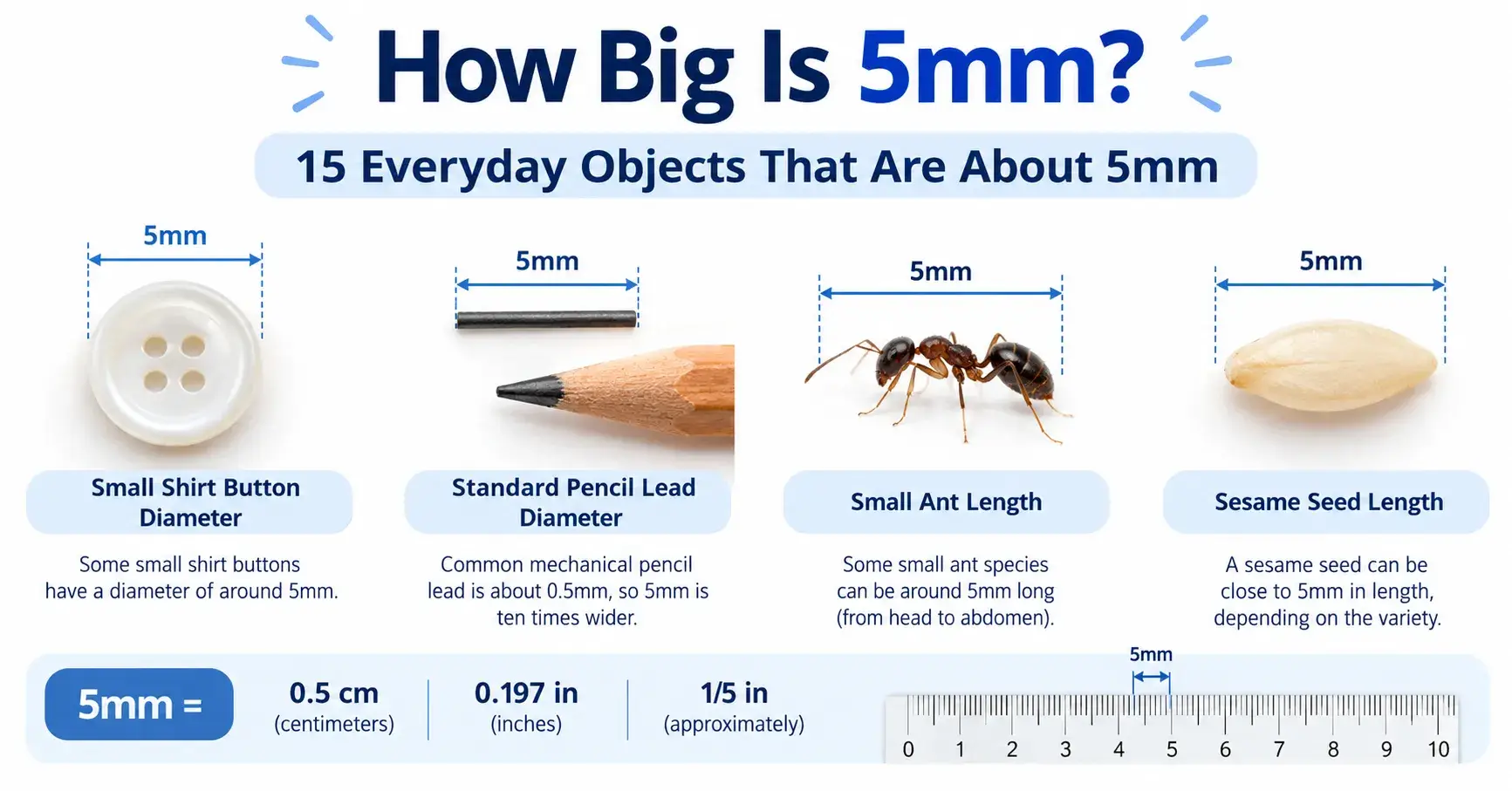
Five millimeters is a small measurement, but you can find similar sizes in many everyday objects. If you want to understand 5mm without a ruler, familiar items such as tiny beads, sesame seeds, small buttons, and screw heads can help. These comparisons make it easier to picture the measurement when working on crafts, checking small parts, or estimating an object’s size.
Five millimeters equals 0.5 centimeters or approximately 0.197 inches. That means it is just a little less than one-fifth of an inch. Although this measurement may look tiny on paper, it can make a noticeable difference when choosing jewelry components, measuring small hardware, or comparing delicate objects.
The examples below will help you visualize this length, understand how it appears on a ruler, and identify everyday items that are close to 5mm. Keep in mind that natural objects and manufactured parts vary in size, so these examples are useful for estimation rather than exact measurement.
How Big Is 5mm?
Five millimeters is half a centimeter. On a standard metric ruler, it is the distance between the zero mark and the fifth small millimeter division. Because there are ten millimeters in one centimeter, 5mm reaches exactly halfway across that centimeter.
Here are the basic conversions:
| Measurement | Equivalent |
| Millimeters | 5 mm |
| Centimeters | 0.5 cm |
| Inches | 0.19685 inches |
| Meters | 0.005 m |
| Fraction of an inch | About 1/5 inch |
When you picture 5mm, think of a very small bead or the width of a tiny decorative component. It is smaller than a typical fingernail’s width and much shorter than most grains of rice. However, the exact appearance depends on whether you are measuring an object’s length, width, thickness, or diameter.
How to See 5mm on a Ruler
The easiest way to identify 5mm is to use a metric ruler. Find the centimeter marks and look at the ten small divisions between two consecutive centimeter lines. Each small division represents 1mm.
Start at the zero mark and count five small divisions. The fifth division represents 5mm, which is also the halfway point between zero and one centimeter.
If your ruler only displays inches, 5mm is slightly smaller than 1/4 inch. A quarter inch measures 6.35mm, so the difference is small but noticeable when comparing the two measurements closely.
For a quick visual reference, draw a short line between the zero and 5mm marks on paper. This gives you a simple reference when comparing small objects. Remember that the printed line itself may have some thickness, so use the measurement marks rather than the line’s outer edges.
15 Everyday Objects That Are About 5mm in Size
Small everyday items can help you imagine a measurement without carrying a ruler. The following examples include objects that may be close to 5mm in one dimension. Their actual sizes vary by brand, type, and natural growth, so check with a ruler or caliper when accuracy matters.
1. Small Shirt Button Diameter

A tiny shirt button is one possible way to visualize a measurement of 5mm. Some small buttons used on delicate clothing, cuffs, or decorative garments have diameters near this size. Larger shirt buttons are often considerably wider, so the comparison depends on the particular button.
Place a small button on a flat surface and measure across its widest circular section. This distance is its diameter. A button measuring 5mm across provides a practical reference for understanding how small half a centimeter really is.
2. Standard Pencil Lead Diameter
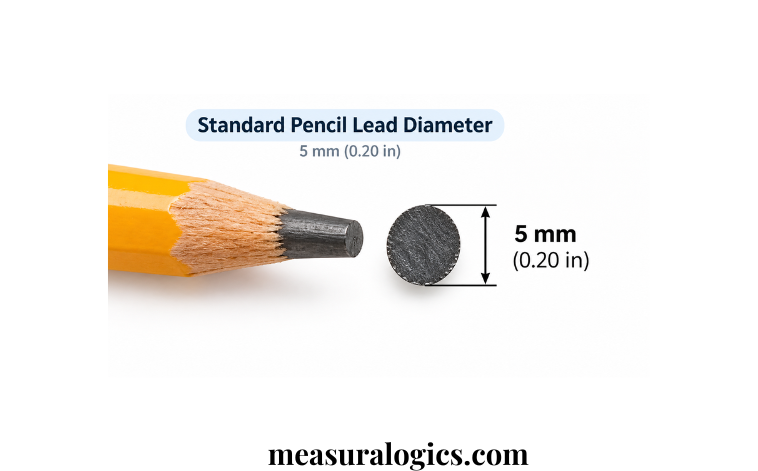
Mechanical pencil lead offers a useful comparison, but it also shows why checking units matters. Common mechanical pencil lead diameters include 0.5mm and 0.7mm. Both are much thinner than 5mm.
A 0.5mm lead measures one-tenth of 5mm. You would need ten such diameters side by side to reach 5mm, assuming no gaps. This example is helpful when you want to understand the difference between a very fine measurement and a measurement of half a centimeter.
3. Small Ant Length
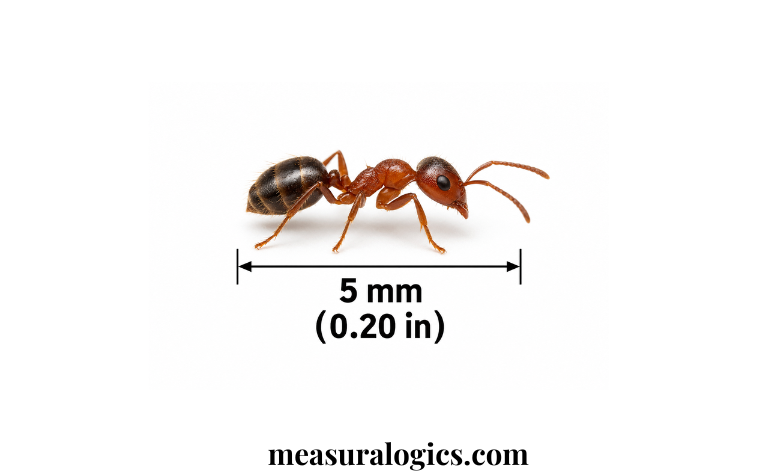
Some small ants are around 5mm long, although many species are shorter or longer. Their body size depends on the species and the type of ant. This makes an ant a useful visual comparison, but not a dependable measuring tool.
To compare an ant with 5mm, consider its body length from the front of the head to the end of the abdomen. Do not include the legs or antennae in this estimate. If you need a more accurate comparison, use a photograph with a known scale rather than judging the insect by sight alone.
4. Sesame Seed Length

A sesame seed can provide a helpful example of a tiny natural object. Some seeds approach 5mm in length, but many are shorter. Their shape, variety, and growing conditions can affect their dimensions.
Look at a sesame seed from end to end to estimate its length. Its narrow width will usually be smaller than its length, so do not confuse these two measurements. If you are trying to picture half a centimeter, a relatively long sesame seed can offer a useful starting point.
5. Small Rice Grain Width

A rice grain is often longer than 5mm, but its width is usually much smaller. This makes rice useful for comparing different dimensions rather than treating the entire grain as a 5mm object.
Place an uncooked grain on a flat surface and look at its narrowest crosswise dimension. Depending on the rice variety, this width may be only a few millimeters. Comparing the width with the length helps you understand why an object’s dimensions must be described clearly when discussing small measurements.
6. Tiny Plastic Bead Diameter
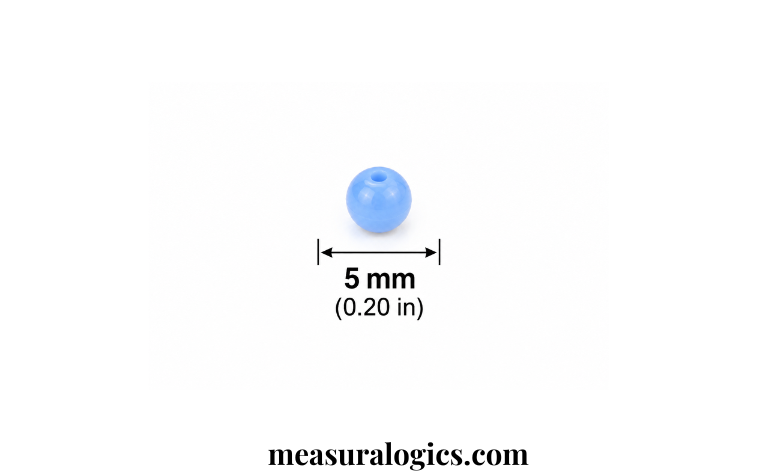
Small plastic beads are among the most useful references for visualizing 5mm. Craft beads are manufactured in different diameters, and some are sold in sizes close to 5mm. Their round shape makes the measurement easy to understand.
To check a bead’s size, measure straight across its widest point. For a round bead, this measurement is its diameter. A bead with a 5mm diameter is exactly half a centimeter across, making it a convenient reference for jewelry projects, bracelets, and small decorative crafts.
7. Small Screw Head Diameter

Some small screws have heads close to 5mm across, but screw dimensions vary by design and intended use. A screw’s head diameter is also different from its shaft diameter and overall length.
When comparing a screw with 5mm, measure across the head at its widest point. Do not use the threaded shaft as a substitute for the head measurement. If you are replacing hardware, check the screw’s specifications because a small difference in diameter can affect how well it fits.
8. Mini Craft Rhinestone Diameter

Mini craft rhinestones are available in different sizes, including options around 5mm. They are commonly used to decorate clothing, greeting cards, phone cases, accessories, and handmade gifts.
A round rhinestone is especially easy to compare with half a centimeter. Measure across its widest circular surface rather than along its height. Keep in mind that the stone’s raised profile may make it look larger than its actual diameter when viewed from an angle.
9. Small Earring Stud Diameter

A small stud earring can offer another familiar size reference. Some decorative stud faces measure close to 5mm, while others are considerably smaller or larger. The measurement generally refers to the visible decorative front, not the post that passes through the ear piercing.
Place the earring face upward and measure across its widest point. A 5mm stud is compact enough for delicate jewelry designs while remaining visible. This comparison can also help when choosing replacement earring backs or matching accessories, although the post and fastening dimensions require separate measurements.
10. Short Staple Width
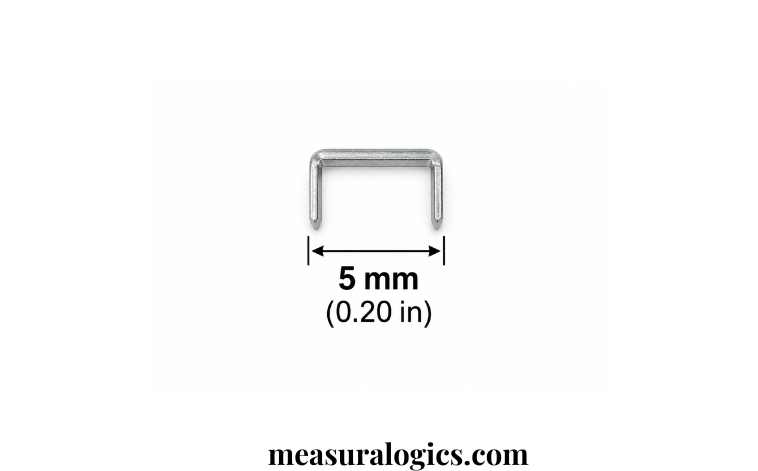
A small office staple can help illustrate a measurement of a few millimeters. However, the staple’s crown width depends on its type, and many standard staples are wider than 5mm. It should therefore be treated as a nearby size comparison rather than an exact example.
The crown is the top horizontal section connecting the two legs. Measure from one outside edge to the other to find its width. If you use staples for a craft or repair project, check the package specifications instead of assuming that all staples share the same dimensions.
11. Small LEGO Piece Feature Width

The raised circular studs on familiar plastic building bricks provide a useful comparison for small measurements. Standard LEGO system studs have a diameter close to 4.8mm, making a stud a particularly relevant reference for understanding 5mm.
The difference between 4.8mm and 5mm is only 0.2mm. That is small enough to be difficult to judge by eye. Measure across the circular top of the stud if you want to compare it with a 5mm mark. This is a better example than measuring the entire brick, which is much larger.
12. Small Seed Length
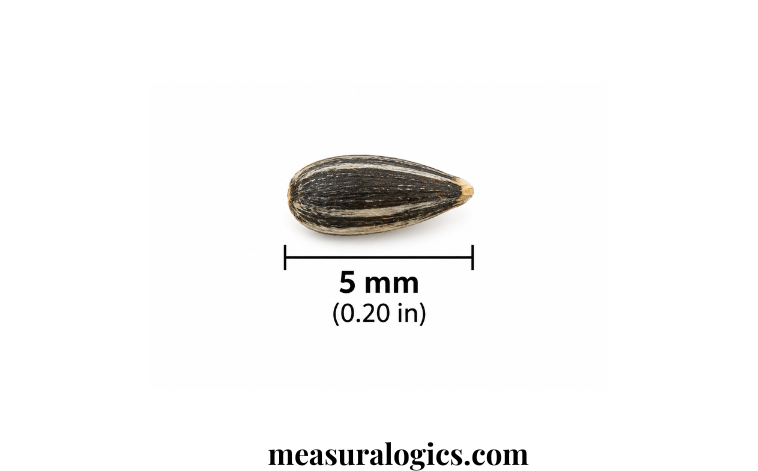
Many garden seeds are only a few millimeters long, although their dimensions depend on the plant species. A relatively small seed can help you visualize a measurement near 5mm without needing a manufactured object.
Seeds vary in shape, too. Some are round, while others are narrow, flat, or oval. When comparing a seed with 5mm, decide whether you want its longest length or its width. For planting and seed identification, the species-specific dimensions are more useful than a general size estimate.
13. Mini Paper Clip Wire Thickness
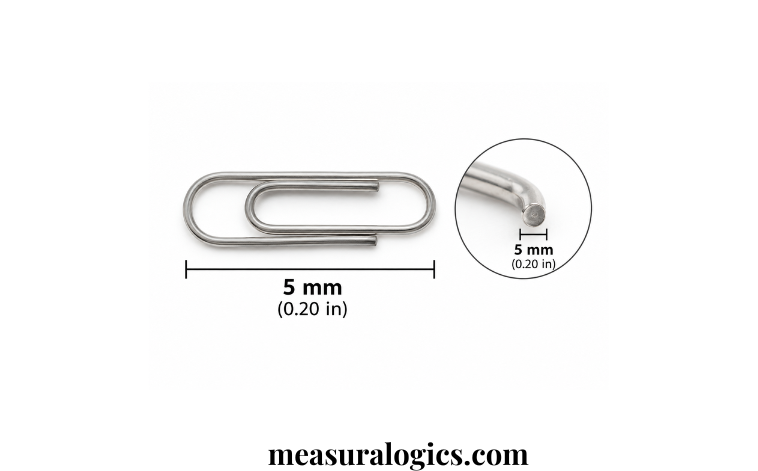
A paper clip is familiar, but its wire thickness is generally far below 5mm. The wire provides a useful example of how a small object’s thickness differs from its overall length.
For a fair comparison, measure the metal wire across its circular cross-section rather than measuring the entire clip. Most ordinary paper clips have wire much thinner than half a centimeter. This example is especially useful for understanding why a statement such as “5mm thick” describes something different from “5mm long.”
14. Small Eraser Thickness
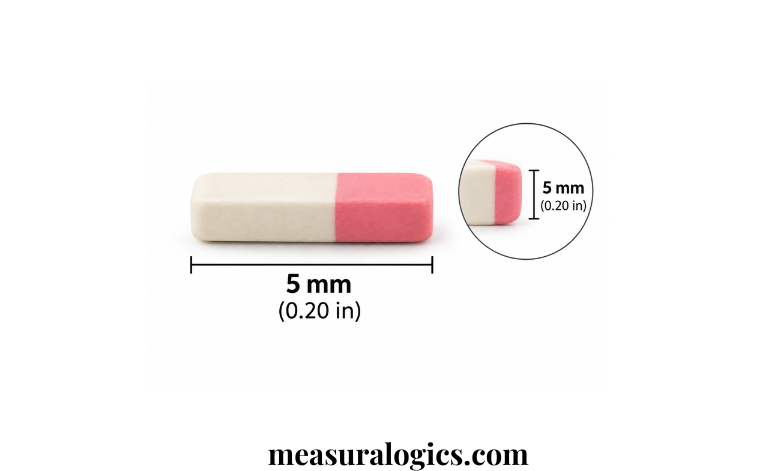
Some slim erasers or narrow eraser sections may have a thickness near 5mm. Many common pencil erasers are thicker, however, so the comparison depends on the design. A thin eraser section can help you picture the distance between two flat surfaces.
Measure from one flat side to the opposite side, keeping the ruler perpendicular to the surface. This gives you the thickness rather than the length or width. The distinction is important when checking whether an eraser, spacer, or small insert will fit into a narrow opening.
15. Small Jewelry Spacer Bead Diameter

Jewelry spacer beads come in different shapes and sizes, with some round options measuring around 5mm in diameter. They help separate larger beads and create spacing in bracelets, necklaces, and other handmade accessories.
A spacer bead with a 5mm outer diameter is half a centimeter across. If it has a central hole, remember that the hole diameter is a separate measurement. When ordering jewelry supplies, check both the outside diameter and the hole size if the bead needs to fit a particular cord or wire.
What Object Is 5mm Thick?
Several small objects may have a thickness close to 5mm, depending on their design. A thin eraser section, a small decorative bead, or a compact plastic component may provide a useful comparison. However, the object’s thickness must be measured separately from its length or diameter.
For example, a round bead can measure 5mm across while having a much smaller height if it is flat. Similarly, a screw may have a head measuring 5mm in diameter but a thinner shaft.
If you need an object that is specifically 5mm thick, measure the distance between its opposite surfaces. A digital caliper is particularly useful for checking small dimensions accurately.
How to Measure 5mm Without a Ruler
You can estimate 5mm using familiar objects, but the result will not always be exact. Try these simple methods when a ruler is unavailable.
- Use a small round bead: A bead labeled 5mm provides a convenient reference if its size is confirmed.
- Compare with a LEGO stud: A standard LEGO system stud is close to 5mm in diameter.
- Use a known measurement: A mechanical pencil lead measuring 0.5mm is one-tenth of 5mm in diameter.
- Compare against a coin or button: These items can help with rough visual estimates, provided you know their actual dimensions.
For the best result, place the object on a flat surface and compare it with a metric ruler. Avoid relying on your fingers because finger widths vary considerably between people.
How Big Is 5mm Compared With Other Measurements?
Understanding nearby measurements makes it easier to recognize 5mm in everyday situations.
| Measurement | Equivalent in centimeters | Equivalent in inches |
| 1mm | 0.1cm | 0.0394in |
| 3mm | 0.3cm | 0.1181in |
| 5mm | 0.5cm | 0.1969in |
| 10mm | 1cm | 0.3937in |
| 5cm | 50mm | 1.9685in |
How Big Is 5mm in Inches?
Five millimeters equals approximately 0.197 inches, which is slightly less than one-fifth of an inch. It is also smaller than one-quarter inch, which measures 6.35mm.
This conversion is useful when working with American product specifications that use inches rather than millimeters. If you are measuring a tiny component, remember that rounding 5mm to 0.2 inches is convenient for estimation but not perfectly exact.
How Big Is 5mm in Centimeters?
Five millimeters equals exactly 0.5 centimeters. Since one centimeter contains ten millimeters, dividing 5 by 10 gives 0.5cm.
You can use this conversion whenever a measurement appears in millimeters but your ruler displays centimeters. Simply divide the millimeter measurement by ten to convert it to centimeters.
How Big Is 5cm?
Five centimeters is ten times larger than 5mm. It equals 50mm, approximately 1.97 inches, and is close to the width of some small household items.
Be careful not to confuse 5mm with 5cm. Although their written measurements look similar, they represent very different sizes.
Where Are 5mm Measurements Commonly Used?
Five-millimeter measurements appear in many practical situations. Jewelry makers use millimeter measurements to choose beads, decorative stones, and small metal components. Hobbyists may need them when selecting model parts, plastic fittings, or craft supplies.
Small hardware is another common example. Screw heads, pins, washers, and other components can have dimensions specified in millimeters. Measuring these parts correctly helps prevent problems when choosing replacements or checking whether components fit together.
The measurement also matters in drawing, woodworking, electronics, and product design. A difference of a few millimeters may affect the fit of a component, particularly when the parts have limited clearance.
For any task that requires a precise fit, use the manufacturer’s dimensions or measure the actual object. Everyday comparisons help you visualize a measurement, but they cannot replace accurate tools.
Common Mistakes When Estimating 5mm
One common mistake is confusing length with thickness. A small object may be 5mm long but only 2mm thick. Always identify which dimension you need before measuring.
Another mistake is assuming that every object in a category has the same size. Buttons, seeds, beads, and screws come in many dimensions. An example described as “about 5mm” may differ from the exact measurement you need.
You should also avoid confusing millimeters with centimeters. Five millimeters equals half a centimeter, not five centimeters. Checking the unit before measuring can prevent errors when ordering supplies or following instructions.
Finally, do not rely entirely on visual estimates for delicate work. Your eyes can help you recognize approximate sizes, but a ruler or caliper is more dependable when accuracy matters.
Frequently Asked Questions
1. How big is 5mm in inches?
Five millimeters equals approximately 0.197 inches. It is slightly less than one-fifth of an inch and smaller than one-quarter inch.
2. How big is 5mm on a ruler?
On a metric ruler, 5mm is the fifth small division after the zero mark. It is exactly halfway between zero and the 1cm mark.
3. How big is 5mm in centimeters?
Five millimeters equals 0.5 centimeters. Divide millimeters by ten to convert them into centimeters.
4. What is an example of something that is 5mm in size?
A standard LEGO system stud has a diameter close to 5mm. Some tiny craft beads and decorative components also measure around this size.
5. What object is 5mm thick?
Some thin eraser sections and small plastic components may be close to 5mm thick. Their actual thickness depends on the specific item, so measure them when accuracy is important.
6. Is 5mm the same as 5cm?
No. Five centimeters equals 50mm, making it ten times larger than 5mm. Five millimeters is only half a centimeter.
7. How big is 3mm compared with 5mm?
Three millimeters is 2mm smaller than 5mm. In centimeters, 3mm equals 0.3cm, while 5mm equals 0.5cm.
8. Can I measure 5mm without a ruler?
You can estimate 5mm using a known-size bead or a LEGO stud. However, a metric ruler or digital caliper provides a more reliable measurement.
Final Thoughts
Five millimeters may seem difficult to picture because it is such a small distance. Everyday examples, including tiny beads, small buttons, decorative rhinestones, and LEGO studs, can make the measurement easier to understand.
Remember that 5mm equals 0.5cm and approximately 0.197 inches. Use familiar objects for quick visual comparisons, but choose a ruler or caliper when an exact measurement matters.

I am Dr. Muhammad Zubair, a mathematician, researcher, and educator with a Ph.D. in Mathematics and postdoctoral research. My research work has been published in reputable, peer-reviewed international journals a reflection of my continued commitment to academic excellence and the advancement of mathematical knowledge. And I am a also experienced blogger at Measura Logic, focusing on all aspects of measurements.