
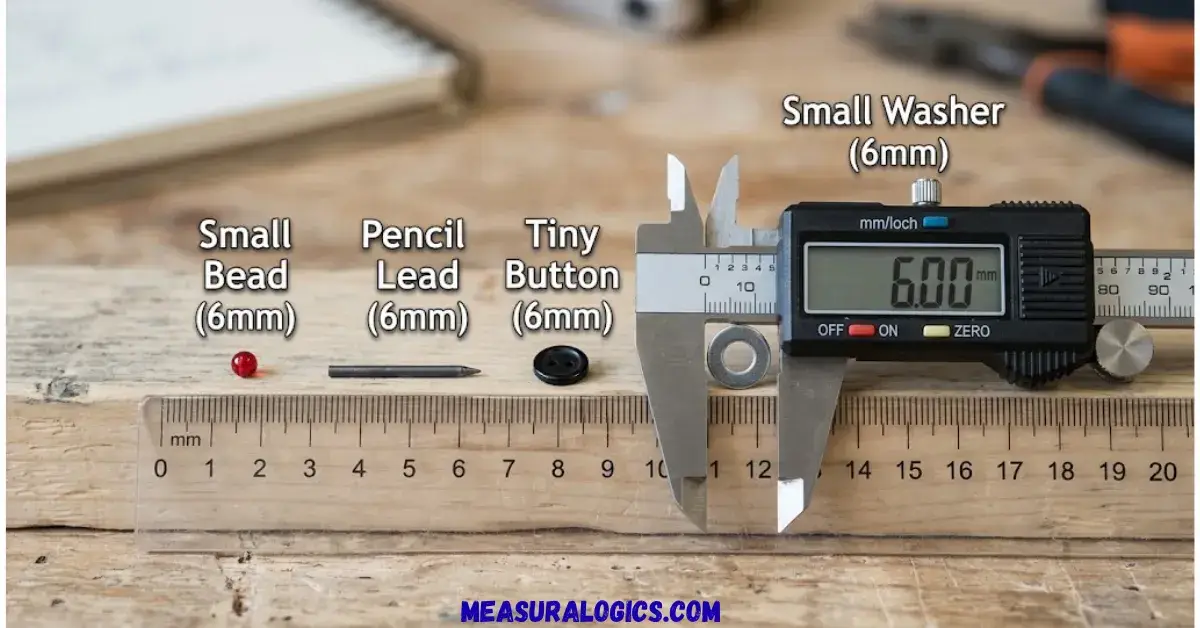
Have you ever wondered how big is 6mm in real life? A measurement this small can feel difficult to imagine. Millimeters are tiny units, so visualizing them can be tricky.
6 mm equals 0.6 centimeters. It also equals about 0.236 inches. That makes it less than one-quarter of an inch.
Many small objects come in 6 mm sizes. Beads, washers, buttons, gems, and spacers are common examples. These objects can help you understand this tiny measurement.
This guide gives you useful 6mm size references. It also explains how 6 mm compares with inches and centimeters.
Keep in mind that some objects come in several sizes. Their exact measurements can vary between products. Therefore, we identify objects commonly manufactured in a 6 mm size.
By the end, you will have a much clearer idea of how large is 6mm. You will also know several everyday objects that can provide a quick visual reference.
6mm at a Glance
Six millimeters is a very small measurement. It measures only 0.6 centimeters.
In inches, 6 mm equals approximately 0.236 inches. It is slightly smaller than 1/4 inch.
Here is a simple way to picture it. Imagine a small bead measuring 6 mm across. It would look tiny beside a standard ruler.
A 6 mm measurement can describe length, width, height, or diameter. The meaning depends on the object being measured.
For example, a bead may have a 6 mm diameter. A washer may have a 6 mm outer diameter. A decorative gem may measure about 6 mm across.
This difference matters when comparing real objects. Always check whether the measurement describes length or diameter.
Quick 6 mm facts
- 6 mm = 0.6 cm
- 6 mm = 0.236 inches
- 6 mm ≈ 1/4 inch
- 6 mm = 6,000 micrometers
- 6 mm = 0.006 meters
So, how big is 6 mm? It is smaller than the width of most pencils. It is also much smaller than a typical fingernail.
For tiny objects, 6 mm can still be a useful size. Jewelry makers and crafters often use millimeters for small parts.
Conversion Table
Converting 6 mm into familiar units makes the measurement easier.
The most useful conversion is from millimeters to inches. To convert millimeters into inches, divide the value by 25.4.
For 6 mm, the calculation is:
6 ÷ 25.4 = 0.2362 inches
Therefore, 6 mm measures approximately 0.236 inches.
It is close to one-quarter inch. However, 6 mm is slightly smaller than 1/4 inch.
Here is a quick comparison table:
| Measurement | Equivalent |
|---|---|
| 6 mm | 0.6 cm |
| 6 mm | 0.2362 inches |
| 6 mm | 0.0197 feet |
| 6 mm | 6,000 micrometers |
| 6 mm | 0.006 meters |
| 1/4 inch | 6.35 mm |
The final row shows an important difference. One-quarter inch equals 6.35 mm.
That means 6 mm is about 0.35 mm smaller than 1/4 inch.
If you search 6 mm to inches, you may see the value rounded to 0.24 inches. That rounded number works for simple visual comparisons.
For accurate measurements, use 0.2362 inches instead.
These conversions make a useful 6mm size reference. They can help when buying crafts, jewelry parts, screws, or other tiny items.
See 6mm Instantly Without Tools
Understanding how big is 6 mm becomes easier through comparisons.
Six millimeters is roughly the thickness of a few stacked sheets of paper. However, paper thickness varies, so this works only as a rough visual guide.
Another simple comparison uses a ruler. Look at the space between 0 and 1 centimeter. Six millimeters covers slightly more than half that distance.
A standard ruler usually marks every millimeter. Count six small marks from the zero line. That distance shows exactly 6 mm.
You can also compare 6 mm with a quarter-inch mark. Six millimeters falls just before the 1/4-inch point.
Small beads provide another useful reference. A 6 mm round bead measures 6 mm across its widest point.
Remember that these comparisons show size. They do not mean every similar object measures exactly 6 mm.
The easiest method remains a ruler or caliper. These tools provide a more reliable measurement.
18 Real Objects That Are Exactly 6mm
The following objects are commonly available in 6 mm sizes. Their measurements can differ between products.
Small Bead
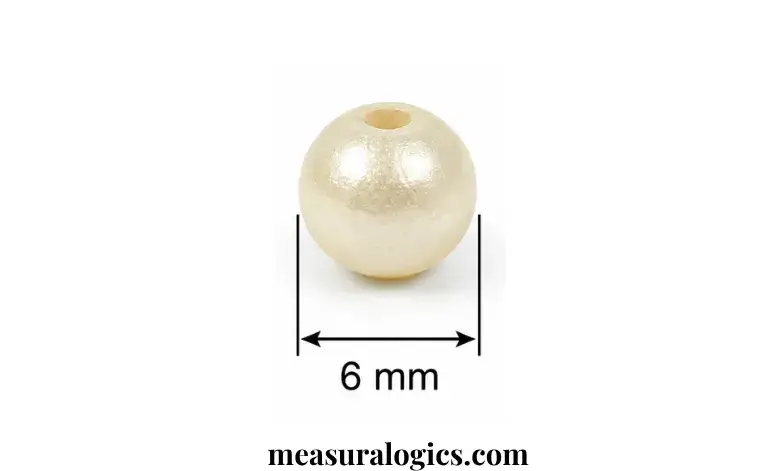
A 6 mm bead is a popular jewelry-making size. Round craft beads often use millimeters for their diameter.
A bead measuring 6 mm across looks very small. It can fit easily between your fingertips.
This makes a 6 mm bead a useful visual reference. Remember that the bead’s diameter represents its size.
Also Read: 16 Common Objects That Are 6 Inches Long
Pencil Lead
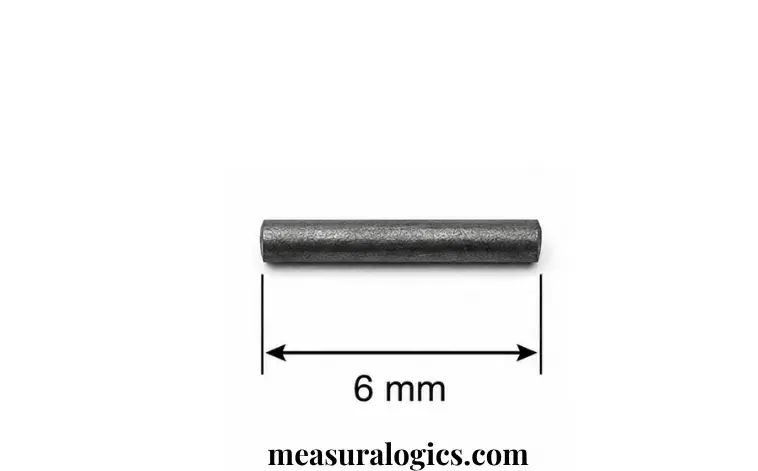
Some specialty pencil leads come in 6 mm diameters. These leads are much thicker than ordinary mechanical pencil leads.
A 6 mm lead looks more like a short graphite rod. It is useful for certain drawing and craft tools.
Always check the product specifications before using this example. Pencil lead sizes vary widely.
Tiny Button
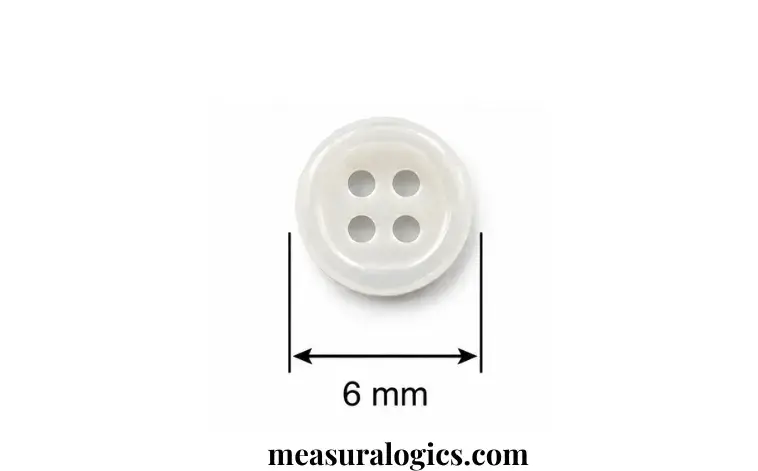
Small craft buttons are often available around 6 mm wide. These tiny buttons work well for miniature crafts.
A 6 mm button is smaller than many standard clothing buttons. It provides a useful comparison for this measurement.
Its exact size depends on the manufacturer.
Small Washer
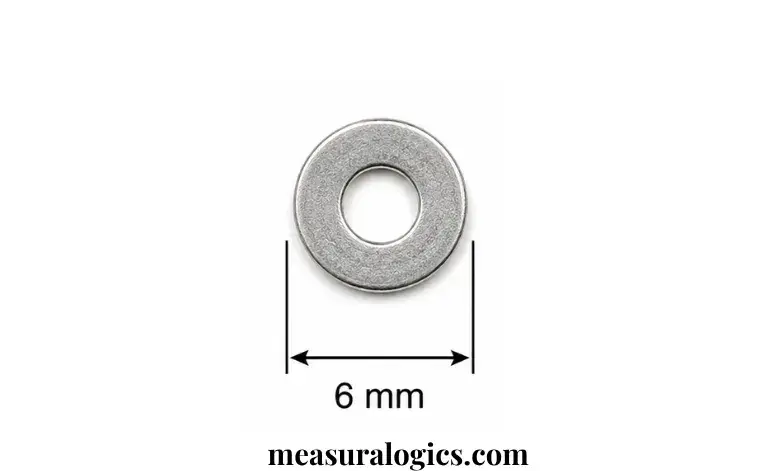
Small metal washers can have an outer diameter near 6 mm. Washers are common hardware components.
A washer is thin but has a visible circular shape. Its outside measurement can help visualize 6 mm.
Check both inner and outer diameters when measuring washers.
Mini O-Ring
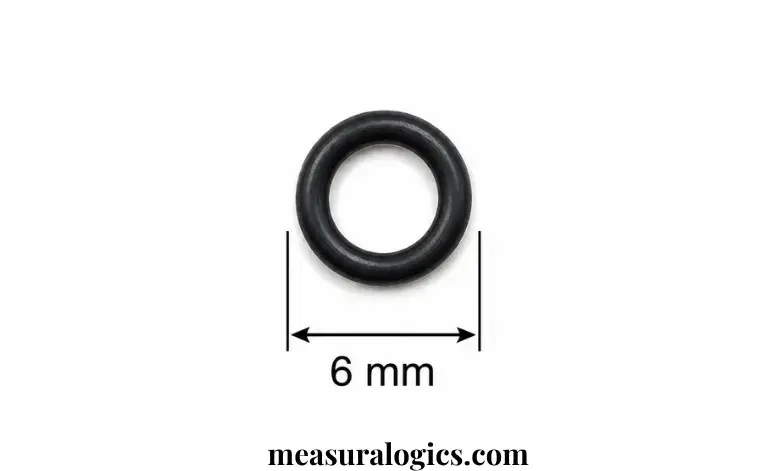
Small O-rings are available in many metric sizes. Some have dimensions around 6 mm.
An O-ring is a small rubber ring used for sealing. Its size can refer to different measurements.
Always check the listed inner diameter and thickness.
Jewelry Bead

Jewelry beads commonly come in 6 mm sizes. Round beads are especially easy to compare.
Place one beside a metric ruler. You can quickly see how small 6 mm looks.
Beads may also use 4 mm, 8 mm, and larger sizes.
Small Rhinestone
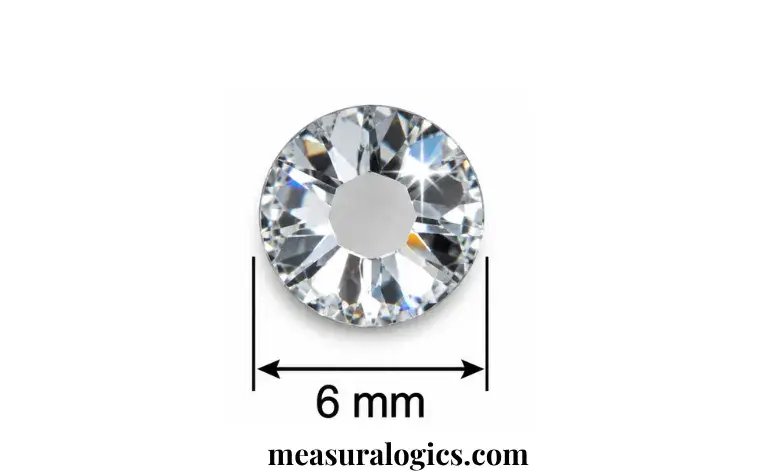
Craft rhinestones are commonly sold in millimeter sizes. Some small rhinestones measure about 6 mm across.
They work well for clothing, cards, crafts, and decorations.
Their shape can affect the measurement. Measure across the widest part for comparison.
Tiny Screw Head
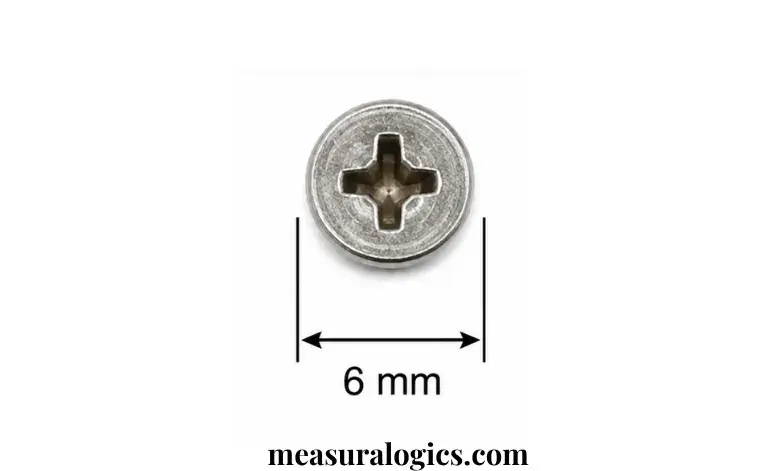
Some small screws have heads close to 6 mm wide. This provides another useful hardware reference.
The screw’s head diameter is different from its shaft diameter. Therefore, specify which part measures 6 mm.
Always check the screw’s product dimensions.
Plastic Spacer
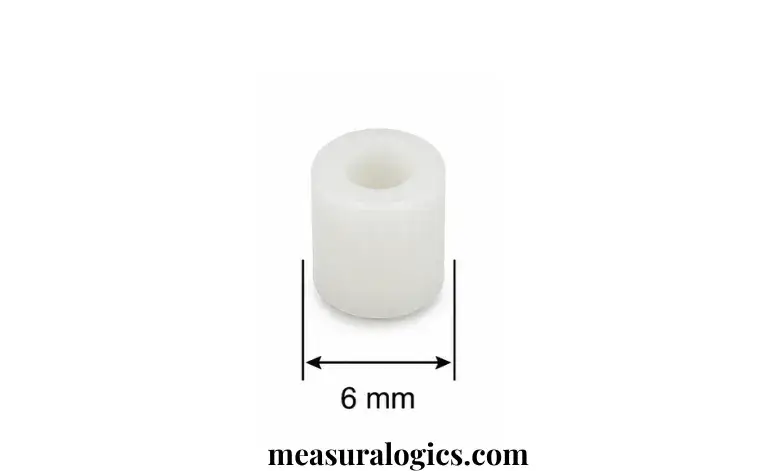
Small plastic spacers can come in 6 mm sizes. Crafters and electronics users often use these tiny parts.
A spacer’s length, outside diameter, or inside diameter may vary.
Check the exact specification before calling it 6 mm.
Small Rubber Grommet
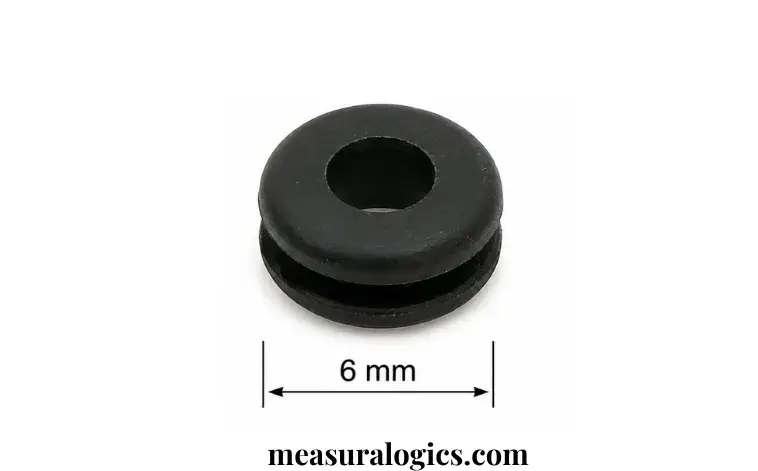
Rubber grommets come in many metric sizes. Some small versions measure around 6 mm.
They can protect wires passing through small openings.
The 6 mm measurement may describe the opening or another dimension. Product specifications should confirm it.
Mini Craft Pearl
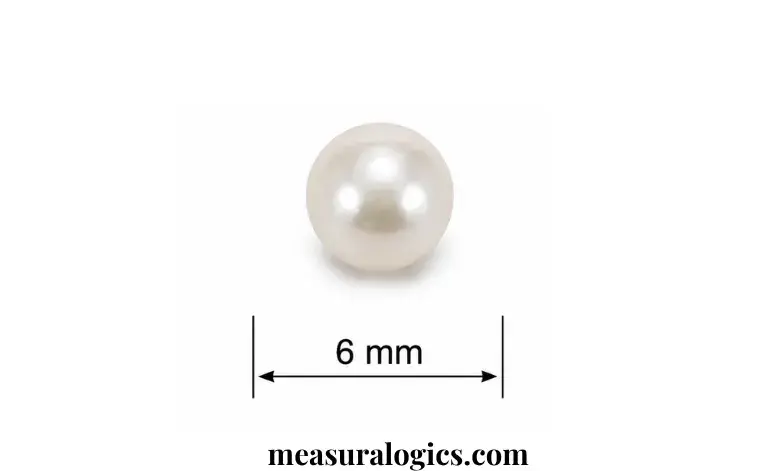
Small craft pearls are often sold by diameter. A 6 mm pearl is a common small size.
Its round shape makes it especially easy to visualize.
Compare it with a ruler to understand the measurement quickly.
Small Cable Clip
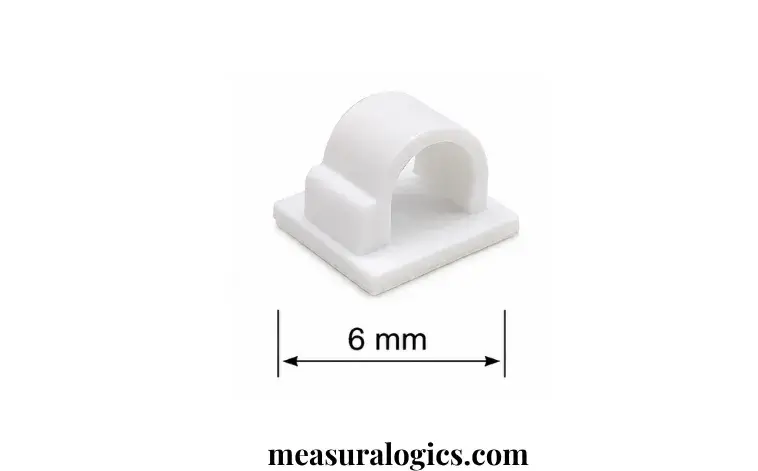
Tiny cable clips are available for holding thin wires. Some models have dimensions close to 6 mm.
The clip’s width and opening can differ.
Use the manufacturer’s measurements for an exact 6 mm comparison.
Tiny Metal Rivet
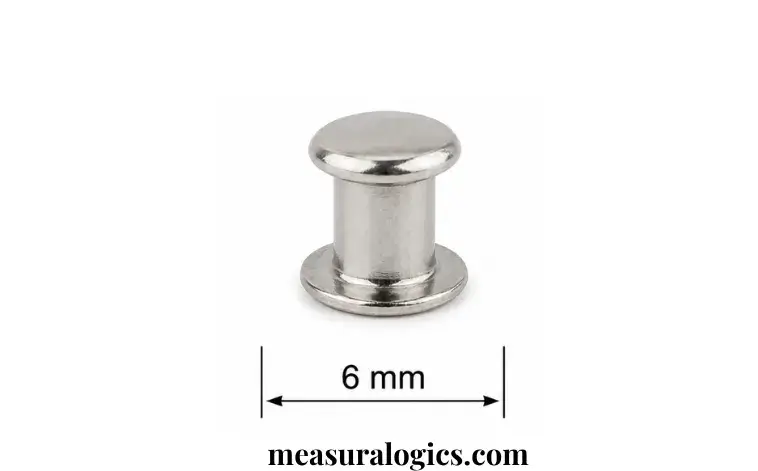
Small rivets can have heads measuring around 6 mm. They appear tiny when placed beside standard hardware.
Rivets come in different head and shaft sizes.
Therefore, identify the 6 mm part clearly.
Mini Washer
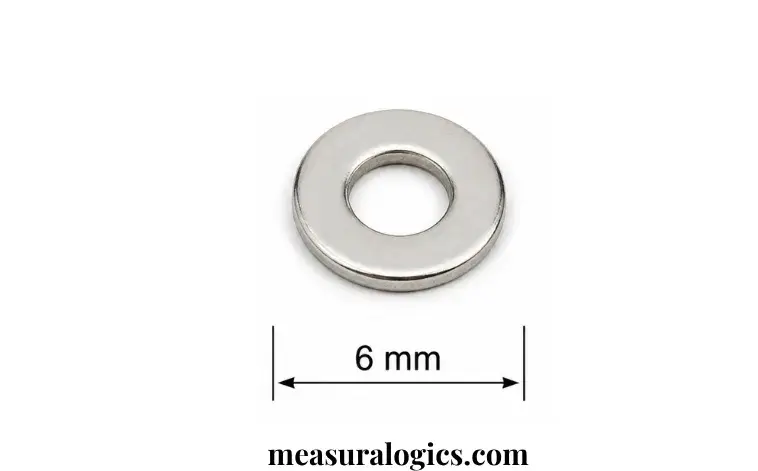
Mini washers can provide another 6 mm reference. They are usually thin metal rings.
Some models have an outer diameter of 6 mm. Others use different measurements.
Check the outside diameter before making a comparison.
Small Craft Sequin

Small sequins often come in several diameters. A 6 mm version is suitable for miniature craft projects.
Its flat shape makes the measurement easy to see.
Measure from one edge to the opposite edge.
Tiny Plastic Bead
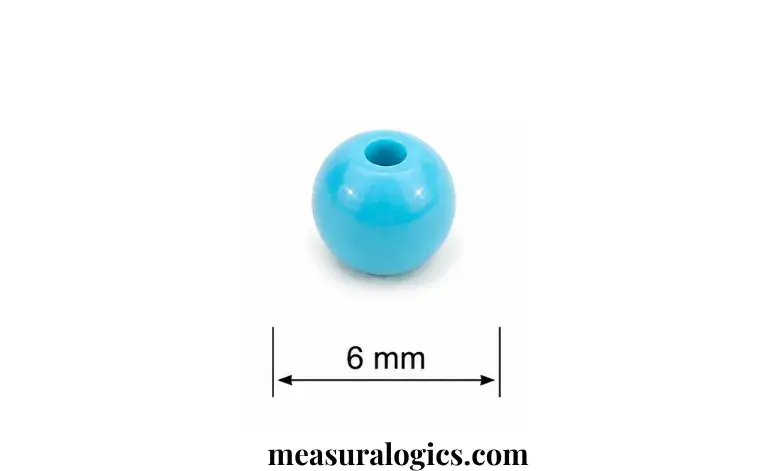
Plastic beads are available in many sizes. Small 6 mm beads are common in craft supplies.
A round plastic bead measuring 6 mm across provides a simple reference.
Color does not affect the actual measurement.
Mini Screw Cap
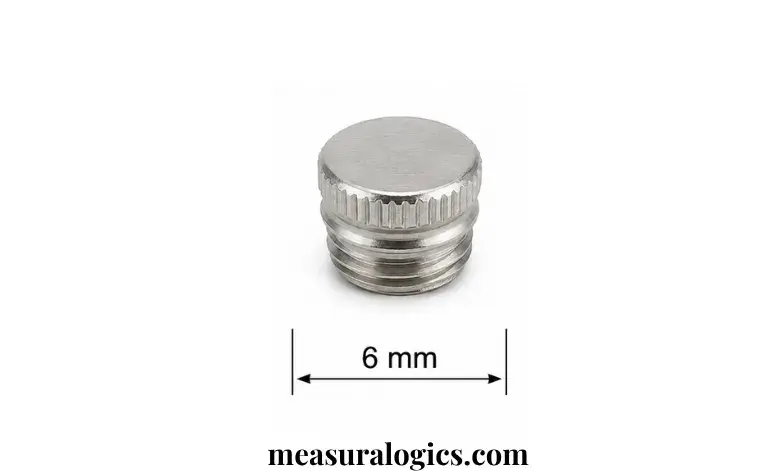
Small screw caps and covers can measure around 6 mm. They are used with tiny fasteners and craft parts.
The cap diameter may provide the 6 mm measurement.
Always check whether the listed size refers to width or height.
Small Decorative Gem
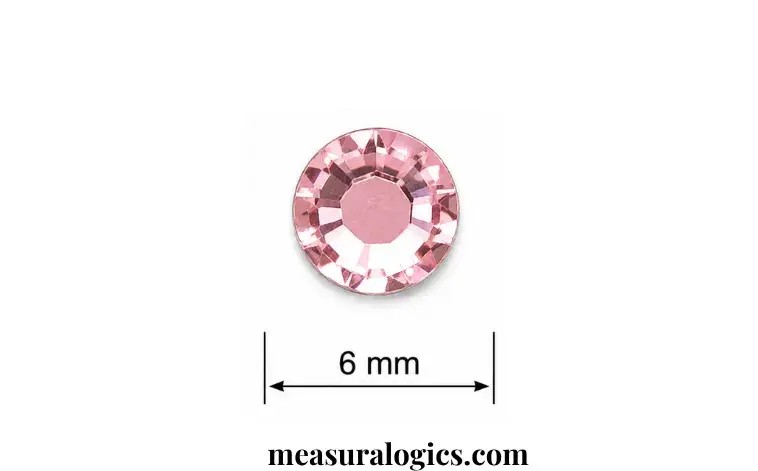
Decorative gems can come in 6 mm sizes. These gems are popular for crafts and jewelry projects.
A 6 mm gem is easy to compare against a ruler.
Its shape may change how the measurement looks visually.
Common Mistakes People Make
One common mistake involves confusing millimeters with centimeters. Six millimeters equals only 0.6 centimeters.
Another mistake involves treating 6 mm as exactly 1/4 inch. They are close, but they are not equal.
One-quarter inch equals 6.35 mm. Therefore, 6 mm is slightly smaller.
People also confuse length with diameter. A round bead measuring 6 mm usually means its diameter.
A 6 mm screw head does not mean the entire screw is 6 mm long.
Another mistake involves trusting visual estimates. Small measurements are difficult to judge accurately by eye.
A ruler provides a better comparison. A digital caliper provides even greater precision.
Product descriptions can also cause confusion. Sellers may describe one dimension while buyers assume another.
Always check the full dimensions before purchasing an item.
If accuracy matters, avoid relying on approximate objects. Use the exact measurements listed by the manufacturer.
FAQs
How big is 6mm?
Six millimeters equals 0.6 centimeters. It measures approximately 0.2362 inches.
How big is 6 mm compared with 1/4 inch?
Six millimeters is slightly smaller than 1/4 inch. One-quarter inch equals 6.35 mm.
How large is 6mm in centimeters?
Six millimeters equals 0.6 centimeters. It is a little more than half a centimeter.
What does 6 mm look like?
Six millimeters looks very small. A 6 mm bead provides an easy visual reference.
What is 6 mm to inches?
Six millimeters equals approximately 0.2362 inches. For quick estimates, you can round it to 0.24 inches.
Conclusion
Six millimeters is a small but useful measurement. It equals 0.6 centimeters or about 0.2362 inches.
Understanding how big is 6 mm becomes easier with real objects. Small beads, washers, buttons, rhinestones, and craft pieces can help.
However, remember that similar objects can come in different sizes. A bead may be available in 4 mm, 6 mm, or 8 mm sizes.
The same applies to washers, screws, spacers, and decorative pieces. Always check the manufacturer’s measurements before assuming an object is exactly 6 mm.
For quick visual comparisons, a metric ruler works very well. Count six small millimeter marks from zero. That distance equals exactly 6 mm.
You can also compare it with 1/4 inch. Just remember that 1/4 inch is slightly larger.
If you often work with tiny objects, learning metric measurements can save time. Millimeters make small dimensions much easier to describe.
The next time someone asks how large is 6mm, you can picture a tiny bead or small craft component.
Use these examples as simple references, not as replacements for precise measuring tools.
If you need exact measurements, use a ruler, measuring gauge, or digital caliper. These tools remove guesswork and give you a more reliable result.

I am Dr. Muhammad Zubair, a mathematician, researcher, and educator with a Ph.D. in Mathematics and postdoctoral research. My research work has been published in reputable, peer-reviewed international journals a reflection of my continued commitment to academic excellence and the advancement of mathematical knowledge. And I am a also experienced blogger at Measura Logic, focusing on all aspects of measurements.