

Have you ever wondered how long 12 inches really is? You may know the number, but imagining its size can still feel hard. A measurement becomes easier when you compare it with familiar objects.
Twelve inches equals exactly one foot. It also equals 30.48 centimeters. In everyday life, this length appears in many common items. You can find it in rulers, food, paper, shelves, and household objects.
Knowing how long 12 inches is can help with shopping, home projects, crafts, and simple measurements. You may need to estimate space without carrying a ruler. A familiar object can give you a quick visual guide.
For example, a regular ruler is usually 12 inches long. A foot-long sandwich also gives you an easy comparison. Some objects may measure close to 12 inches rather than exactly 12 inches. Their sizes can differ by brand or design.
This guide explores 14 common things that can help you picture 12 inches. Each example explains the size in simple terms. You will also learn useful conversions and easy estimation tricks.
By the end, you should have a much clearer idea of what 12 inches looks like. These comparisons can make everyday measurements easier and faster.
Understanding What 12 Inches Actually Looks Like
12 inches represents one complete foot. It is a familiar length used in many everyday measurements. Most people can picture a foot more easily than twelve separate inches.
One inch equals 2.54 centimeters. Therefore, twelve inches equals 30.48 centimeters. In millimeters, the same length equals 304.8 millimeters.
You can picture 12 inches as about the length of a standard ruler. It is also close to the width of some household objects. Many products use this measurement because one foot is convenient.
Imagine placing twelve small one-inch sections in a straight line. Together, those sections create a 12-inch length. This simple idea helps explain the relationship between inches and feet.
A 12-inch length is not especially large. It is also not very small. It sits between many common short measurements and larger household dimensions.
For example, a 12-inch object can fit comfortably inside many backpacks. It can also sit across a desk or countertop without taking much space.
When asking how big is 12 inches compared to an object, choose something familiar. A ruler works best because its markings show every inch.
You can also use your hand as a rough guide. However, hand sizes vary from person to person. So, hand measurements should only provide an estimate.
A ruler, paper edge, or foot-long object gives a better comparison. These references can help when you need a quick visual estimate.
Understanding 12 inches becomes much easier when you connect the number with real objects. Instead of imagining an abstract measurement, you can picture something you already know.
12 Inches Formula and Conversion
Converting 12 inches into other units is simple. The most important fact is that 12 inches equals exactly 1 foot.
The basic conversion looks like this:
12 inches = 1 foot
For centimeters, multiply inches by 2.54.
12 × 2.54 = 30.48 centimeters
Therefore:
12 inches = 30.48 cm
For millimeters, multiply inches by 25.4.
12 × 25.4 = 304.8 millimeters
Therefore:
12 inches = 304.8 mm
You may also want to know the reverse conversion. If something measures 30.48 centimeters, it measures exactly 12 inches.
This information helps when comparing products that use different measurement systems. Some websites list dimensions in inches. Others use centimeters or millimeters.
If you are asking 12 inches to feet, the answer is exactly one foot. There is no rounding needed.
If you are asking 12 inches to cm, the answer is 30.48 centimeters. For quick everyday estimates, you can think of it as about 30.5 centimeters.
The same measurement can appear differently depending on the unit. Twelve inches, one foot, 30.48 centimeters, and 304.8 millimeters all describe the same length.
This conversion also helps when buying furniture or household products. Suppose a shelf has a depth of 12 inches. You can immediately understand that it measures about 30.5 centimeters.
Knowing these conversions makes measurements easier to compare. It also prevents mistakes when switching between measurement systems.
Comparison Table
| Measurement | Equivalent |
| Inches | 12 inches |
| Feet | 1 foot |
| Centimeters | 30.48 cm |
| Millimeters | 304.8 mm |
| Meters | 0.3048 m |
| Yards | 0.3333 yards |
| Approximate centimeters | 30.5 cm |
| Approximate millimeters | 305 mm |
This table gives a quick reference for 12 inches. The exact metric values come from standard measurement conversions.
The most useful conversion for everyday life is 12 inches to feet. Twelve inches makes exactly one foot.
The centimeter conversion can help when shopping internationally. Many products sold outside the United States use centimeters. Knowing that 12 inches equals 30.48 centimeters makes comparisons easier.
Millimeters provide even more detail. Twelve inches equals 304.8 millimeters. This unit often appears in technical product measurements.
You can also use meters for larger measurements. Twelve inches equals 0.3048 meters. That makes sense because one meter contains 1,000 millimeters.
For quick mental estimates, remember two simple numbers. One foot equals 12 inches. One inch equals about 2.54 centimeters.
These two facts allow you to estimate many other measurements.
For example, 6 inches equals half a foot. Six inches also equals 15.24 centimeters. Twelve inches is simply twice that length.
A comparison table becomes especially useful when reading product dimensions. You can quickly translate measurements without performing the calculation every time.
Everyday Examples of 12 Inches
1. A Regular Ruler
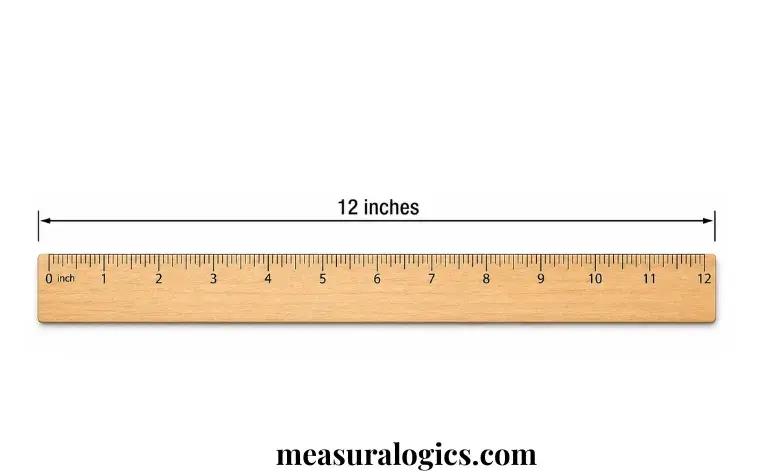
A regular ruler is one of the easiest ways to understand 12 inches. Many standard rulers measure exactly 12 inches from end to end.
A ruler also provides clear visual markings. You can see each individual inch and its smaller divisions. This makes it more useful than most household objects.
If you place a 12-inch ruler on a table, its total length equals one foot. This gives you a direct reference for other objects.
For example, imagine a shelf beside the ruler. If the shelf looks about the same length, it may measure close to 12 inches.
Rulers are useful because they show exact measurements. You do not need to guess whether the object is slightly longer or shorter.
A standard ruler usually includes inches on one side. Some rulers also show centimeters on the other side. This makes them useful for comparing measurement systems.
If someone asks how long is 12 inches, simply showing a ruler can answer the question. The object provides an easy visual reference.
You can also use the ruler to estimate objects that do not have printed dimensions. Place it beside the object and compare their lengths.
Keep in mind that rulers come in different sizes. A school ruler may measure 12 inches. Longer rulers can measure 18, 24, or 36 inches.
The 12-inch ruler remains one of the best examples because its length matches the measurement exactly.
For crafts, school projects, woodworking, and home repairs, this reference becomes especially helpful. It lets you estimate distances quickly.
If you own a 12-inch ruler, you already have one of the simplest tools for understanding this measurement.
2. A Foot-Long Sub Sandwich

A foot-long sub sandwich provides another familiar example of 12 inches. The name itself gives you the clue.
A foot-long sandwich aims to measure about one foot. Since one foot equals 12 inches, its advertised length is about 12 inches.
The actual bread may vary slightly because food products are not always perfectly uniform. The bread can also change shape during preparation.
Still, a foot-long sandwich provides a useful visual comparison. Most people can picture the length of a large sandwich.
Imagine placing the sandwich beside a 12-inch ruler. Their lengths should look fairly similar.
This example also explains why people use “foot” as a measurement. A foot is not only a body-related word. It represents a standard unit equal to 12 inches.
When someone asks how big is 12 inches, you can say it is about the length of a foot-long sandwich.
The sandwich is usually long and narrow. This makes its length easy to see. However, its width does not represent 12 inches.
That distinction matters. Measurements describe specific dimensions. An object can be 12 inches long but only a few inches wide.
Food sizes can also differ between brands and restaurants. Therefore, use a foot-long sandwich as a visual estimate.
This example works well because it is easy to recognize. You do not need special equipment to imagine its size.
If you have ever eaten a foot-long sub, you have already seen something close to 12 inches long.
3. The Diameter of a Vinyl Record

A 12-inch vinyl record is another excellent example. Many full-size records have a diameter of 12 inches.
Diameter means the straight distance from one side of a circle to the other through its center.
So, a 12-inch record measures about 12 inches across. That makes it a strong visual reference.
Place the record on a table. Its circular shape creates a clear 12-inch span from edge to edge.
This example can help answer how big is 12 inches compared to an object. A record is large enough to see the measurement clearly.
The term “12-inch record” refers to the record’s size. Many albums use this format because it provides enough surface area for music.
However, not every vinyl record measures 12 inches. Smaller formats also exist. Always check the product specifications when exact size matters.
A 12-inch record is approximately 30.48 centimeters across. You can use this fact when comparing it with metric measurements.
The record’s thickness does not equal 12 inches. Only its diameter matches the measurement.
This is an important lesson when using objects for size comparisons. You must identify the exact dimension being measured.
A circular object can look different from a straight ruler. Yet its diameter can still provide an accurate 12-inch reference.
If you have a 12-inch vinyl record at home, place it beside other objects. You may quickly notice which items have a similar width.
It is one of the more interesting household examples of this common measurement.
4. How Wide a Mid-Size Laptop Is
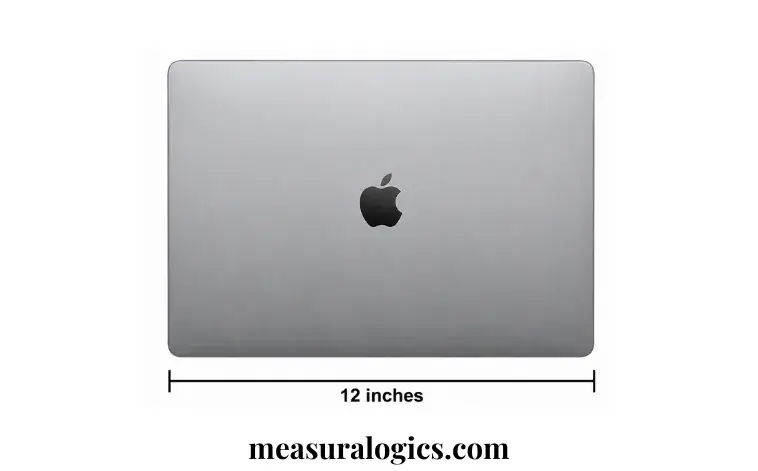
Some mid-size laptops can measure close to 12 inches in width. However, laptop dimensions vary greatly between models.
This makes laptops a useful visual comparison rather than an exact measurement.
A compact laptop may be narrower than 12 inches. A larger model may be wider. The screen size also affects the overall laptop dimensions.
When people say a laptop has a 12-inch screen, they usually mean the screen’s diagonal measurement. This does not mean the laptop is 12 inches wide.
That difference often causes confusion.
For example, a laptop can have a 12-inch diagonal display while its body measures less than 12 inches across.
If you want to compare 12 inches to an object, check the laptop’s listed width. Product specifications provide the most accurate answer.
A laptop around 12 inches wide can give you a helpful visual idea. It is roughly the length of a standard ruler placed across its body.
This comparison works especially well because many people use laptops every day.
You can place a ruler across the laptop to see the relationship. The measurement becomes easier to understand visually.
Remember that laptop sizes change by model. Therefore, do not assume every mid-size laptop measures exactly 12 inches wide.
Use this example for general visualization. Use a ruler for exact measurements.
The example also teaches an important point about screen measurements. Screen size and physical width are different things.
Understanding this difference can help you avoid mistakes when shopping for laptops, sleeves, desks, and bags.
5. The Short Edge of a Standard Sheet of Paper

The shorter edge of common letter-size paper measures 8.5 inches. So, it does not equal exactly 12 inches.
However, paper can still help you visualize the difference.
A standard sheet of U.S. letter paper measures 8.5 by 11 inches. Its long edge comes close to 12 inches but remains one inch shorter.
Place an 11-inch paper sheet beside a 12-inch ruler. You can easily see the one-inch difference.
This comparison helps answer how long is 12 inches compared to an object.
If you have no ruler, paper provides a useful near-reference. You can remember that the long edge of letter paper is slightly shorter than one foot.
This example also shows why approximate comparisons need care. Saying paper is 12 inches long would be inaccurate.
The exact long edge is 11 inches. The short edge is 8.5 inches.
Other paper sizes may have different dimensions. A4 paper, for example, does not match U.S. letter paper.
Therefore, always identify the paper size before using it for measurement.
Still, an 11-inch paper edge can help you picture 12 inches. The difference is only one inch.
You can imagine adding one inch to the long edge. That extra distance creates exactly 12 inches.
This simple comparison can make the measurement easier to understand. It also teaches you to avoid rounding when precision matters.
Paper remains one of the most accessible objects for quick measurement estimates.
Read Also : 16 Everyday and Common Things That Are 20 Inches Long
6. A Large Dinner Plate

Some large dinner plates measure close to 12 inches across. This makes them useful household references for 12 inches.
Plate sizes vary, so not every dinner plate measures 12 inches. Some are smaller, while large plates can be bigger.
When comparing a plate with 12 inches, measure its diameter. The diameter runs straight across the center.
A 12-inch plate would have an edge-to-edge diameter of exactly one foot.
This makes the plate easy to picture. Most people know the approximate size of a dinner plate.
However, plate measurements can describe different parts. Manufacturers may measure the outer rim, inner eating area, or overall diameter.
For accurate measurements, check the manufacturer’s specifications.
A large plate also gives you a good visual sense of area. Twelve inches across feels much wider than a 12-inch-long narrow object.
This shows why length and width can change how a measurement feels.
Two objects can both measure 12 inches. One may look long and thin, while another looks wide and round.
If someone asks how big is 12 inches, a large plate provides a strong visual example.
Place a 12-inch ruler across the center of the plate. The ruler should span from one edge to the other.
This method makes the measurement easy to understand without complicated math.
Just remember that dinner plates come in many sizes. Treat this example as a comparison, not a universal rule.
7. A Tablet’s Diagonal Screen Size
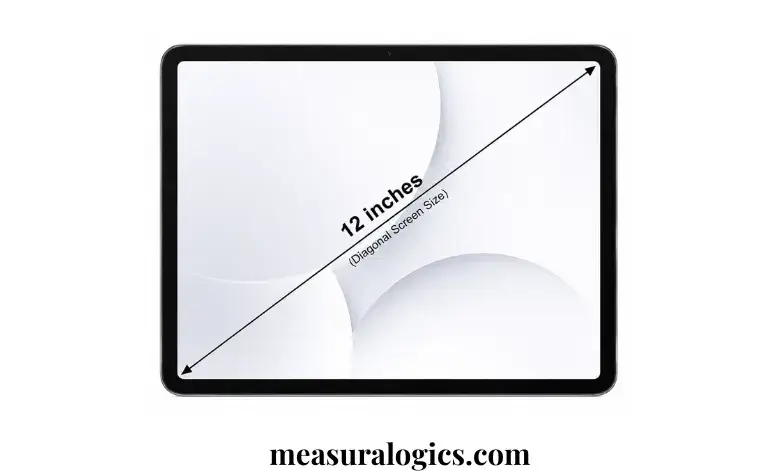
A tablet with a 12-inch screen gives another useful example. However, its 12-inch measurement usually describes the screen’s diagonal.
The diagonal runs from one corner of the display to the opposite corner.
This differs from the tablet’s physical width or height.
For example, a tablet can have a 12-inch diagonal screen while measuring less than 12 inches wide.
This distinction matters when asking how long is 12 inches compared to an object.
Screen sizes commonly use diagonal measurements. Television screens, monitors, laptops, and tablets often follow the same system.
Therefore, you should never assume a 12-inch screen has a 12-inch width.
A tablet with a 12-inch diagonal can still help you picture the length. Imagine a straight line connecting two opposite corners.
That line measures about 12 inches.
The tablet’s body may extend slightly beyond the screen. Bezels and other design features can increase the overall size.
If you need a tablet for a specific bag or shelf, check the complete dimensions.
This example is helpful because digital devices are common. Many people already understand screen sizes better than abstract measurements.
A 12-inch tablet screen also equals about 30.48 centimeters diagonally.
Remember that the diagonal measurement does not tell you the exact height or width.
This simple distinction prevents many measurement mistakes.
8. A Loaf of Bread
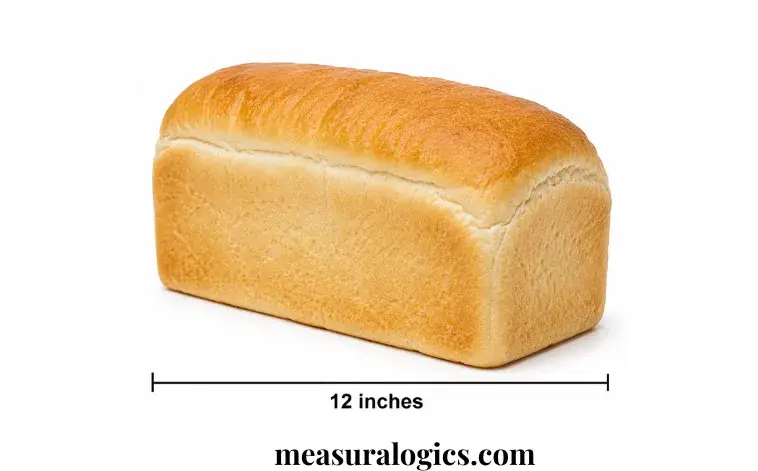
Some loaves of bread can measure close to 12 inches in length. Their actual size depends on the type and brand.
Long sandwich loaves often provide a good visual reference. A loaf around one foot long gives you a familiar example.
Bread is not a precision measuring tool. Its shape can change during baking and packaging.
Therefore, use it only as a rough comparison.
A 12-inch loaf can look quite different from a 12-inch ruler. The ruler is narrow, while the loaf has width and height.
This difference shows how objects with the same length can have different shapes.
If you place a ruler beside a loaf, you can quickly estimate its length.
You may also see product descriptions that list bread dimensions. Those specifications can provide more accurate information.
When someone asks what is 12 inches, a loaf of bread can make the answer more visual.
It is familiar, easy to imagine, and close to one foot in length.
However, avoid assuming every loaf is 12 inches. Some sandwich loaves are shorter or longer.
Bread also becomes compressed during packaging. That can slightly change its apparent size.
For everyday estimation, this example works well. For cooking or packaging measurements, use an actual measuring tool.
A loaf is especially useful when teaching children about length. They can compare it with a ruler and understand the difference quickly.
9. The Shorter Side of a Shoe Box

Some shoe boxes have a shorter side close to 12 inches. However, box dimensions differ widely between shoe sizes and brands.
The length may exceed 12 inches. The width may be around 7 to 12 inches. The height usually measures much less.
This makes shoe boxes useful for rough comparisons.
If you have a box at home, check its printed dimensions. Many boxes include measurements on packaging.
You can then compare those numbers with 12 inches.
A box that measures 12 inches across one side gives you a clear visual reference.
This example also shows why dimensions often appear as length, width, and height.
For example, a box might measure 12 × 8 × 5 inches. Only the first dimension equals 12 inches.
The other dimensions remain different.
This matters when buying storage boxes or planning shelf space.
If you need a container that fits inside a 12-inch space, measure the exact side that must fit.
Do not rely only on the box’s overall size.
Shoe boxes also help explain how a measurement can describe one direction. An object can be 12 inches long without being 12 inches wide or tall.
For a quick visual estimate, a shoe box around one foot long works well.
For accurate work, always use a measuring tape or ruler.
10. A Regular School Notebook
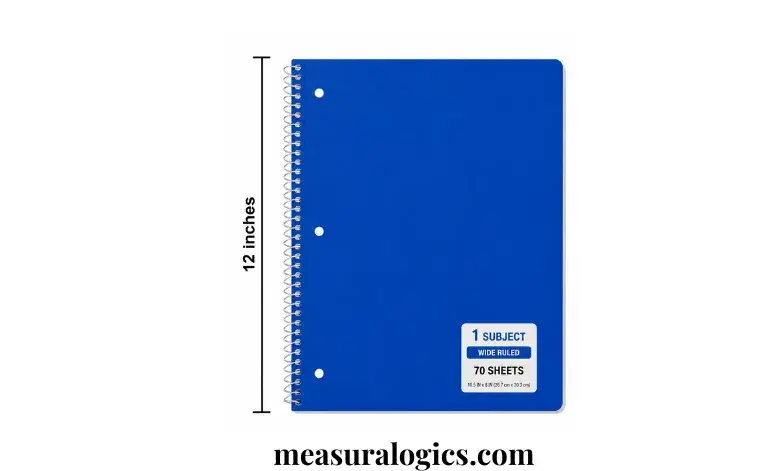
Some school notebooks can measure close to 12 inches on their longer side. Notebook sizes vary, so this example should remain approximate.
A large notebook can provide a familiar visual reference for 12 inches.
Place the notebook beside a 12-inch ruler. If its long edge reaches about the same distance, it is close to one foot.
Different countries use different paper and notebook sizes. Therefore, notebook dimensions are not universal.
Some notebooks are much smaller. Others can be larger than 12 inches.
Check the product dimensions when accuracy matters.
The notebook example is useful because students see notebooks regularly. They can understand the size without needing advanced measurement knowledge.
You can also compare a notebook with standard paper. This helps show how different common sizes relate.
If a notebook measures 12 inches tall, that means its height equals one foot.
Its width can still be much smaller.
This distinction is important when describing objects. Always state which dimension equals 12 inches.
A notebook can also help with quick craft measurements. You might use its edge as a rough guide for a project.
However, notebooks are not always perfectly uniform. Covers can extend slightly beyond the pages.
For precise projects, use a ruler instead.
Still, a large notebook remains a simple and familiar object for picturing 12 inches.
11. A Compact Wall Shelf
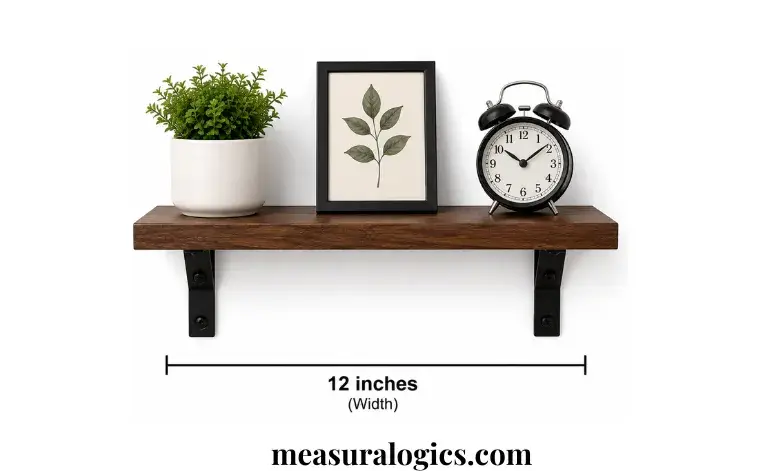
A compact wall shelf may have a length or width close to 12 inches. Small shelves often use one-foot dimensions because they fit easily into limited spaces.
A 12-inch shelf measures one foot across its relevant dimension.
This makes it a practical example of 12 inches in home design.
Imagine placing a 12-inch ruler across the front edge. The ruler would cover the shelf from end to end.
Shelves can have different depths. A shelf may be 12 inches wide but only 6 or 8 inches deep.
Therefore, always identify which measurement equals 12 inches.
This matters when planning storage. A shelf that is 12 inches wide needs enough wall space for that width.
You should also leave room for mounting hardware and nearby objects.
Small shelves are common in bedrooms, kitchens, offices, and bathrooms. That makes them useful real-life references.
A one-foot shelf is large enough to hold several small items. Yet it remains compact enough for small spaces.
If you are planning a DIY shelf, accurate measurements become important.
Use a tape measure before cutting wood or drilling holes.
A shelf can help answer how big is 12 inches compared to an object because its straight edges make the measurement easy to visualize.
Its practical use also makes the comparison meaningful.
12. A Standard Computer Keyboard
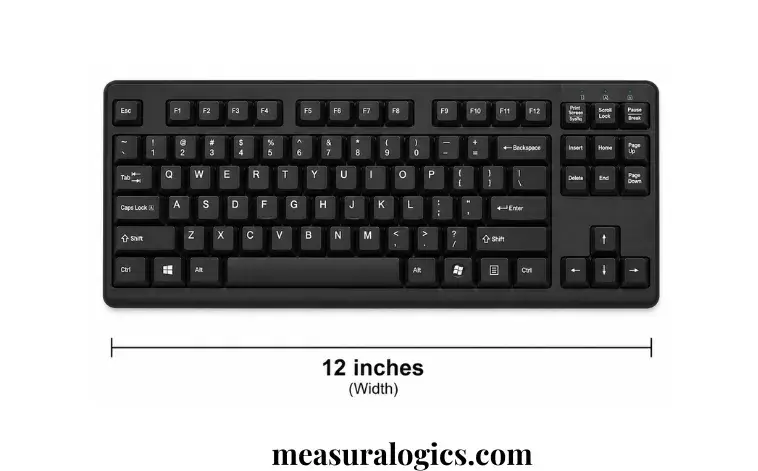
A standard computer keyboard can measure around 12 inches in width. However, keyboard sizes vary by design.
Compact keyboards may be narrower. Full-size keyboards can be wider.
Therefore, a keyboard provides a rough comparison rather than an exact measurement.
If a keyboard measures around 12 inches across, it gives you a familiar one-foot reference.
Place a ruler across the keyboard from one side to the other. You can immediately compare the two widths.
Keyboard dimensions matter when planning desk space. A larger keyboard needs more room than a compact model.
This example also shows why product measurements should be checked before buying accessories.
A keyboard tray, desk shelf, or laptop stand may need specific dimensions.
If the keyboard is 12 inches wide, it requires at least that much horizontal space.
You should still leave extra room for comfortable use.
When people ask how long is 12 inches, a keyboard can provide an easy mental image.
Many people use keyboards every day. This makes the comparison simple and memorable.
Keep in mind that some keyboards use unusual layouts. Gaming keyboards may include extra controls and wider designs.
Compact keyboards can also measure less than 12 inches.
So, use the keyboard as a general visual guide. Use the manufacturer’s specifications for exact measurements.
13. A Compact-Style Rolling Pin
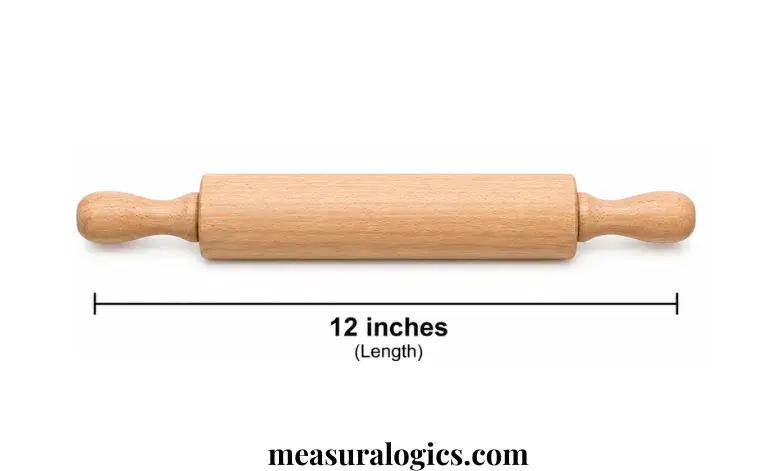
Some compact rolling pins can measure close to 12 inches long. These smaller kitchen tools work well in tight spaces.
A 12-inch rolling pin is about one foot long.
Its cylindrical shape makes the length easy to see. Place a ruler along the rolling pin from one handle or end to the other.
Rolling pins come in many lengths. Traditional full-size models can be longer than 12 inches.
Compact versions may measure around one foot.
This makes them useful for smaller kitchens and simple baking tasks.
A rolling pin’s length should not be confused with its diameter. The length describes the distance from one end to the other.
The diameter describes how thick the rolling pin is.
This distinction is important when reading product dimensions.
A compact rolling pin gives you another way to understand 12 inches compared to an object.
You can imagine it beside a ruler or across a countertop.
Because rolling pins are straight objects, they provide a clear length comparison.
If you need a rolling pin for a specific drawer, measure the drawer first.
Do not assume every compact rolling pin measures exactly 12 inches.
Manufacturers may offer different lengths for different cooking needs.
For general visualization, however, a one-foot rolling pin works very well.
14. A Cat’s Height When Sitting Up

A cat sitting upright can sometimes reach close to 12 inches in height. However, cats vary greatly in size and body shape.
This means a cat is only a rough comparison for 12 inches.
A small cat may sit lower than one foot. A larger cat may reach higher.
The cat’s posture also changes the measurement.
If you measure from the floor to the top of the head, you are measuring height. If you measure from the body to the paws, you are measuring something different.
This example can help explain why object comparisons are not always exact.
Animals do not have fixed dimensions like rulers.
Still, imagining a small or average cat sitting upright can help you picture about one foot of height.
If you need an accurate measurement, use a ruler or measuring tape.
Never rely on an animal as a precise measuring reference.
The comparison remains useful because people often understand animal sizes easily.
When asking how tall is 12 inches, you can imagine a small cat sitting upright.
Remember that individual cats can vary significantly.
This example should therefore remain a visual guide rather than a measurement standard.
It also reminds us that height and length are different measurements.
A cat might be around 12 inches tall while having a much longer body when stretched out.
Everyday Advantages
Knowing 12 inches can make many daily tasks easier. You can estimate space before reaching for a measuring tool.
For example, imagine a small shelf that needs to fit inside a cabinet. Knowing that 12 inches equals one foot helps you estimate the available space.
You can also use familiar objects for quick comparisons.
A ruler gives the most accurate reference. A foot-long sandwich, notebook, plate, or shelf can provide a rough mental picture.
This skill can help while shopping online. Product descriptions often include measurements that may seem confusing.
If you know that 12 inches equals 30.48 centimeters, you can quickly understand the size.
It also helps when planning home projects.
Suppose you need a 12-inch space between two objects. One foot gives you an easy starting point.
You should still confirm the measurement with a tape measure when precision matters.
Understanding conversions also prevents costly mistakes.
A product listed as 12 inches is not 12 centimeters. Twelve inches is much longer. It equals 30.48 centimeters.
The difference becomes important when buying furniture, shelves, electronics, and storage products.
Knowing these basic conversions can save time.
It can also make measurement terms easier to understand.
The more familiar you become with everyday comparisons, the easier measurements feel.
Instead of thinking only about numbers, connect the number with something you can see and touch.
A Mistake People Often Make
One common mistake involves confusing inches with centimeters. 12 inches equals 30.48 centimeters, not 12 centimeters.
Another mistake involves confusing screen size with physical size. A 12-inch tablet usually refers to the diagonal screen measurement.
It does not mean the tablet is 12 inches wide.
People also sometimes assume every similar object has the same dimensions.
For example, not every dinner plate measures 12 inches. Not every laptop is 12 inches wide.
Product sizes vary by brand, model, and design.
Another mistake involves measuring the wrong dimension.
An object might be 12 inches long but only 6 inches wide. If you need its width, the 12-inch length does not help.
Rounding can also cause problems.
You might call 11 inches “about 12 inches” for a rough estimate. That may work for visualization.
However, it would be wrong for precise construction or product fitting.
When exact measurements matter, use a ruler or measuring tape.
You should also check whether a measurement describes height, width, depth, length, or diameter.
These terms can describe completely different parts of an object.
Understanding these differences makes your measurements more reliable.
The safest approach is simple: use familiar objects for visualization, but use measuring tools for accuracy.
Easy Ways to Estimate 12 Inches Without a Ruler
You can estimate 12 inches without carrying a ruler. The easiest method is remembering that 12 inches equals one foot.
Your own foot can provide a rough reference. However, foot sizes differ, so this method is not exact.
You can also use a standard sheet of letter paper. Its long edge measures 11 inches. Adding roughly one more inch gives you 12 inches.
Another useful reference is a foot-long object. A foot-long sandwich is an easy example.
You can also remember that 12 inches equals 30.48 centimeters.
If you have a phone with a known size, you can compare it with the measurement. But phone dimensions vary, so use this only for rough estimation.
Your hand can also help. The distance between certain hand points may be close to several inches. Yet hand sizes vary widely.
A 12-inch ruler remains the best simple reference when accuracy matters.
For mental estimation, divide one foot into smaller parts.
Six inches equals half a foot. Three inches equals one-quarter of a foot. Nine inches equals three-quarters of a foot.
These relationships help you estimate other lengths quickly.
If something looks about twice as long as six inches, it is near 12 inches.
If it looks slightly longer than an 11-inch sheet of paper, it may be close to one foot.
These tricks are useful for quick decisions.
However, do not use estimates for cutting, construction, medical measurements, or other situations where precision matters.
FAQs
How long is 12 inches?
Twelve inches equals exactly one foot. It also equals 30.48 centimeters or 304.8 millimeters.
What is 12 inches compared to a human?
Twelve inches equals one foot. It may reach from the ground to around the lower leg area on many adults, but body proportions vary.
How big is 12 inches compared to an object?
A 12-inch ruler provides the clearest comparison. Other objects may include foot-long sandwiches, some plates, and compact shelves.
How many feet are 12 inches?
Twelve inches equals exactly one foot.
How many centimeters are in 12 inches?
There are exactly 30.48 centimeters in 12 inches.
Conclusion
Understanding 12 inches becomes much easier when you connect it with everyday objects. Twelve inches equals one foot, which makes it a familiar measurement.
A standard ruler is one of the best examples. It provides an exact 12-inch reference with clear markings.
Other objects can provide useful visual comparisons. These include foot-long sandwiches, vinyl records, large plates, notebooks, keyboards, and compact shelves.
Remember that many household objects vary in size. A laptop, loaf of bread, dinner plate, or shoe box may measure close to 12 inches. They do not always measure exactly 12 inches.
For accurate measurements, always use a ruler or measuring tape.
The main conversions are also easy to remember. 12 inches equals 1 foot, 30.48 centimeters, and 304.8 millimeters.
These conversions help when shopping online or comparing products. They also make international measurements easier to understand.
Knowing how long 12 inches is can help with home projects, school work, crafts, cooking, and everyday planning.
You can also use familiar objects when you do not have a ruler nearby. Just remember that these comparisons provide estimates.
If you want to understand measurements better, start with simple references. Learn one foot, six inches, three inches, and one inch.
These basic measurements create a useful mental measuring system.
Next time you see a product listed as 12 inches, you will have a much clearer picture.
Use a ruler for accuracy, familiar objects for visualization, and standard conversions for reliable comparisons. With practice, 12 inches will become a simple and easy measurement to recognize.

I am Dr. Muhammad Zubair, a mathematician, researcher, and educator with a Ph.D. in Mathematics and postdoctoral research. My research work has been published in reputable, peer-reviewed international journals a reflection of my continued commitment to academic excellence and the advancement of mathematical knowledge. And I am a also experienced blogger at Measura Logic, focusing on all aspects of measurements.